Jun 26, 2026News & Insights
About The Most Influential Sculptors of Alberto Giacometti – Artist Overview
About The Most Influential Sculptors of Alberto Giacometti – Artist Overview Alberto Giacometti (1901–1966) was one of the most influential sculptors of the 20th century, as well as a painter and prin
About The Most Influential Sculptors of Alberto Giacometti – Artist Overview
Alberto Giacometti (1901–1966) was one of the most influential sculptors of the 20th century, as well as a painter and printmaker. Born in Switzerland, he spent most of his career in Paris, becoming a key figure in modernism and existentialist art.
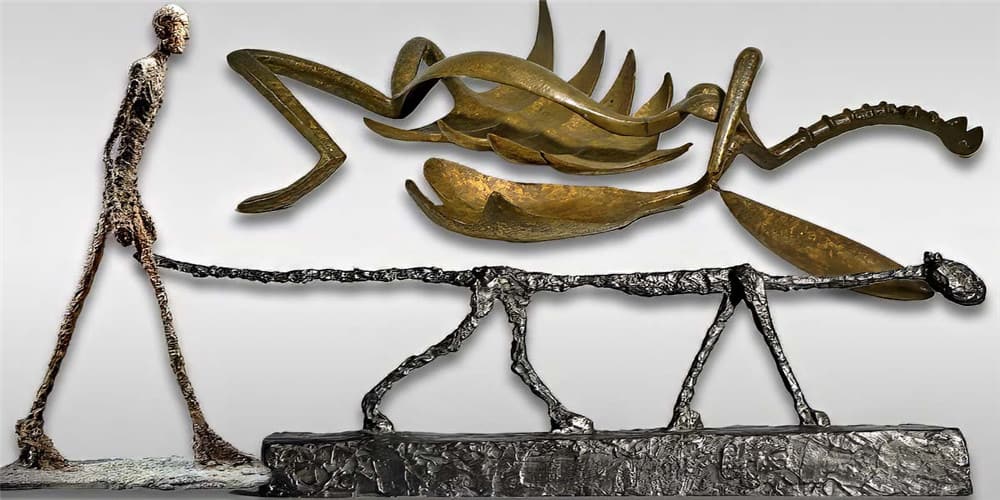
His works are famous for their elongated human figures, expressing themes of isolation, fragility, and the human condition in the post-war era. His career spanned Surrealism but culminated in his iconic, spindly, "matchstick" human figures, from Walking Man to Pointing Man, the visual language he created has become an indelible mark on modern art.
I. Artistic Story & Background:
Giacometti's creative journey was deeply philosophical. During WWII, he worked in a hotel room, making sculptures so small they could fit into a matchbox. He once said, "I narrowed them to express distance." After the war, his style shifted dramatically—figures became incredibly tall and slender, appearing like survivors whittled down by the crushing pressure of space. This "matchstick" silhouette became a profound symbol of Modernist art. His sculptures became expressions of both physical form and philosophical meaning.
II. Core Artistic Style and Characteristics:
Giacometti's artistic style is highly recognizable, characterized by:
- Elongated and distorted human proportions: One of his most iconic works, featuring a slender figure walking forward, symbolizing human persistence in isolation and uncertainty.
- Rough, textured surfaces: The bronze surfaces are covered in indentations left by his frantic kneading. This rugged texture captures the vibration of light and shadow, giving the cold metal a rhythmic pulse.
- Strong sense of space and isolation: Giacometti believed that space is not empty; it presses upon us. His slender forms are designed to represent human vulnerability within the vastness of the universe.
- Deep philosophical focus on human existence: A series of female figures standing still, emphasizing presence and inner strength.
His sculptures are often associated with existentialism, exploring the essence of being.
III. Famous artworks:
- Walking Man I
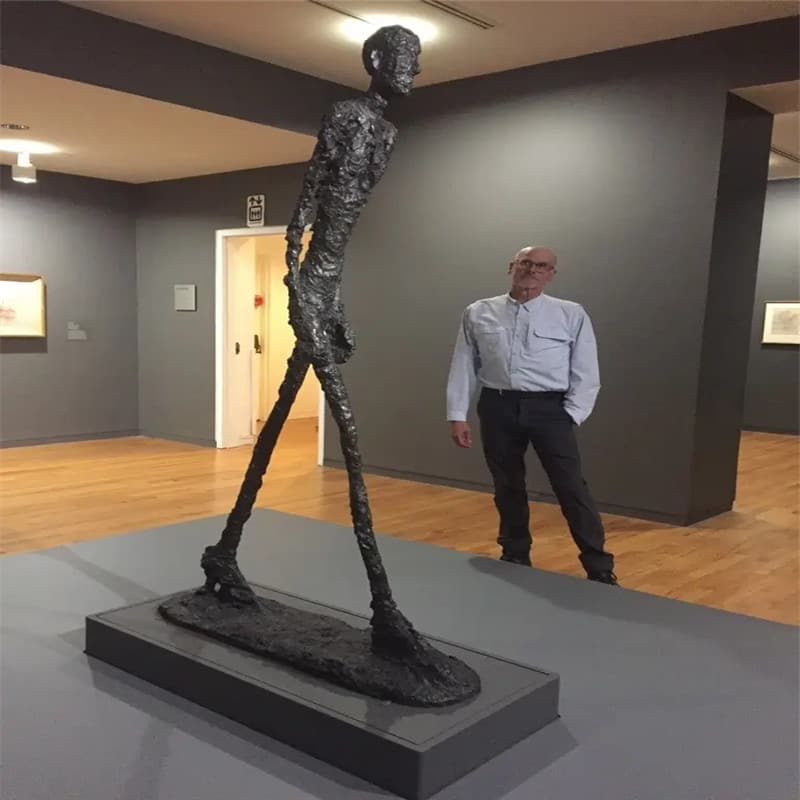
Walking Man I (French: L’Homme qui marche I) is a bronze sculpture created in 1960 by Alberto Giacometti. It is considered one of the most iconic masterpieces of 20th-century modern sculpture, representing the core of existentialist philosophy and the universal condition of humanity through its elongated, solitary walking figure.
Key Information:
Artist: Alberto Giacometti
Year: 1960
Material: Bronze
Dimensions: Approx. 180.5 × 27 × 97 cm
Collections: Fondation Alberto et Annette Giacometti; Solomon R. Guggenheim Museum and others
Concept and Style:
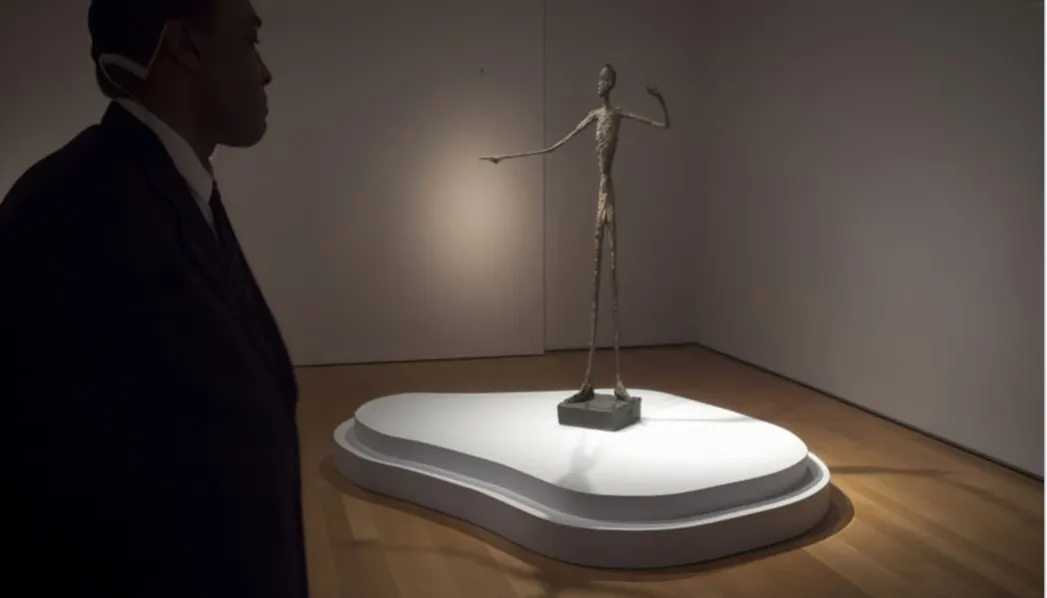
Walking Man I depicts a solitary male figure striding forward, with a slightly leaning posture, elongated limbs, and an indistinct face. The rough surface appears weathered, as if eroded by time.
Through this image of “a man in motion,” Giacometti explores themes of human fragility, isolation, and perseverance. The sculpture embodies the existentialist spirit of post-war Europe, echoing the philosophical inquiries of thinkers such as Jean-Paul Sartre and Albert Camus into existence and meaning.
Historical Background:
The sculpture was originally conceived as part of a public art project for the plaza of the Chase Manhattan Bank. Giacometti planned a series that included Walking Man I, Walking Man II, and several standing female figures, although only part of the project was completed.
After being exhibited at the Venice Biennale in 1962, the work gained widespread recognition. It was later featured on the reverse side of the Swiss 100-franc banknote, further cementing its cultural significance.
Material and Form:
Cast in bronze, the sculpture retains its raw, unpolished surface, preserving the marks of the artist’s hand. The texture gives the impression of a body on the verge of dissolution, yet still resisting the surrounding space.
By dramatically elongating the figure and reducing its mass, Giacometti creates a powerful tension between presence and emptiness—forming his distinctive visual language.
Market Value and Influence:
In 2010, a cast of Walking Man I was sold for approximately $104 million at auction in London, making it the most expensive artwork ever sold at that time.
This record highlights its exceptional status in both modern sculpture history and the global art market. Today, the sculpture is widely regarded as a symbol of 20th-century humanism, representing the timeless image of humanity moving forward in the face of existence and nothingness.
- Standing Woman:
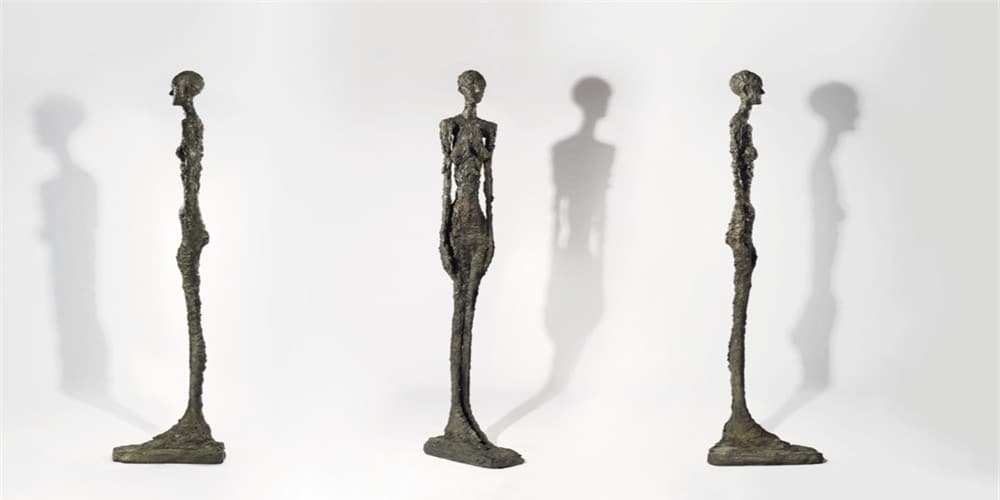
Standing Woman(French:Femme debout) is a series of bronze sculptures created by Alberto Giacometti during the 1940s and 1950s. These works depict extremely elongated female figures with rough textures, becoming a defining representation of his post-war style. The series symbolizes isolation, existence, and the fragility of the human condition.
Key Information:
Artist: Alberto Giacometti (1901–1966)
Period: Circa 1946–1956
Material: Bronze (with original plaster versions)
Typical Size: Approximately 30–120 cm in height
Collections: Metropolitan Museum of Art, Art Institute of Chicago, National Gallery of Art
Historical Background:
After returning to Paris following World War II, Giacometti shifted his artistic focus from surrealism to an existentialist approach. Centering on the human figure, he sought to capture the presence of individuals within space.
The Standing Woman series originated from plaster works created around 1946, which were later cast into multiple bronze versions over time.
Form and Style:
The figures in this series are extremely slender, with exaggerated feet and rough, textured surfaces. Typically, the female figures stand upright with arms hanging down, expressing a sense of stillness and introspection.
The visible hand-worked surface and attenuated proportions create an almost eroded appearance, reinforcing themes of fragility, distance, and isolation. The verticality and restrained posture further intensify the emotional and existential tension.
Meaning and Influence:
The Standing Woman series represents Giacometti’s profound exploration of the concept of “existence,” closely aligned with existentialist philosophy, including the ideas of Jean-Paul Sartre.
These works have had a lasting impact on modern sculpture, becoming one of the most recognizable visual languages of the 20th century.
Notable Versions:
1946 Plaster Version: Collected by the Metropolitan Museum of Art
Circa 1947 Bronze Version: Collected by the National Gallery of Art
1956 Bronze Cast: Collected by the Art Institute of Chicago
- The Nose:
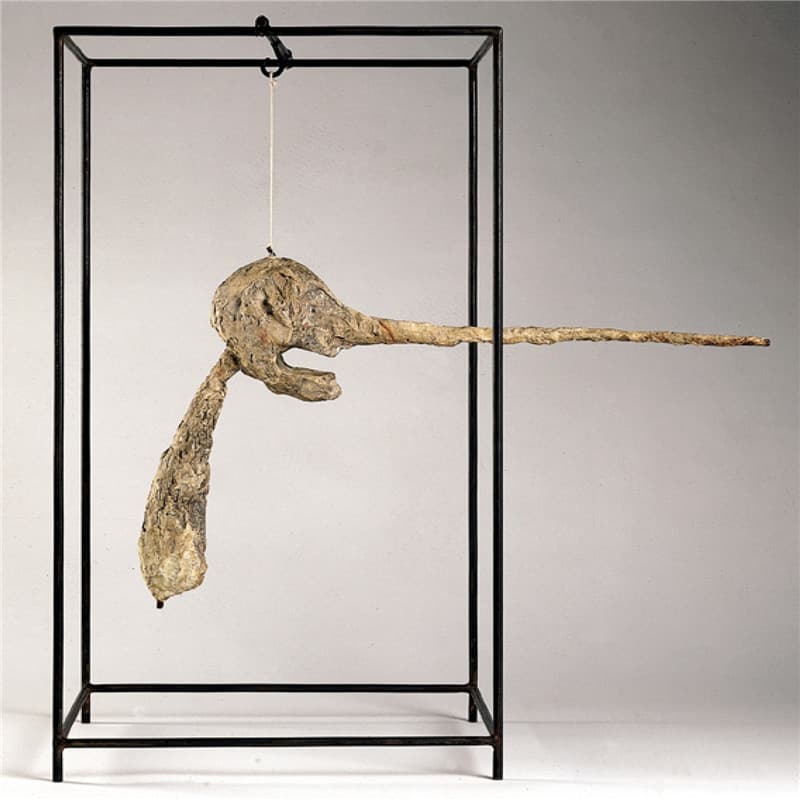
The Nose is a bronze sculpture created in 1947 by Alberto Giacometti. The work features a suspended head enclosed within a rectangular metal cage, with an elongated nose dramatically protruding through the bars—forming a striking symbol of surrealism. It reflects the artist’s post-war exploration of human anxiety, isolation, and the fragmentation of the body.
Key Facts:
Year: 1947
Materials: Bronze, rope, and metal frame
Dimensions: Approx. 81 × 22 × 25 cm (including frame)
Collections: Solomon R. Guggenheim Museum and other major institutions
Style: A fusion of Surrealism and Existentialism
Background and Creation:
The Nose was created shortly after World War II, during a pivotal transition in Giacometti’s artistic career. Working in his Paris studio, he produced a series of experimental sculptures exploring fragmented human forms and cage-like spatial structures.
Through these works, Giacometti sought to express feelings of isolation, fear, and psychological tension that exist between physical and mental boundaries. The Nose, with its distorted head and exaggerated feature, symbolizes the absurdity and violence embedded in human existence.
Form and Symbolism:
The composition presents the head as if trapped or suspended within a confined space, conveying both fragility and tension. The protruding nose suggests an exaggerated sensory experience and a distortion of reality.
The metal frame functions as a “spatial cage,” creating a sense of distance and separation for the viewer. This reinforces existential themes of alienation and isolation.
Influence and Collections:
The Nose is considered one of the key works from Giacometti's surrealist phase and has had a significant influence on modern sculpture, particularly in terms of spatial construction and psychological symbolism.
In addition to the Solomon R. Guggenheim Museum, casts of the sculpture are also held by the Fondation Giacometti and other major art institutions.
IV. Giacometti is not only a powerhouse in the art market but also a national treasure of Switzerland—his portrait once graced the 100 Swiss Franc banknote. His masterpieces are the crown jewels of elite institutions like the Met in New York and the Tate in London. In high-end interior design, owning a "Giacometti-style" bronze signifies a collector's profound philosophical depth and sophisticated aesthetic taste.