Aug 5, 2026News & Insights
Antonio Canova: Master Sculptor of Neoclassicism, His Life, Style, and Iconic Works
Comprehensive overview of Antonio Canova: life, Neoclassical style, major sculptures (dates, media, locations), historical context, influence, exhibitions, and key bibliography.
Antonio Canova (1757–1822) stands as one of the most celebrated sculptors in Western art history. Revered across 18th- and 19th-century Europe as the supreme master of Neoclassicism, Canova revived the serene balance, idealized proportions, and emotional poise of classical Greek and Roman antiquity while infusing marble with an unprecedented lifelike warmth.
Biography and Early Career:
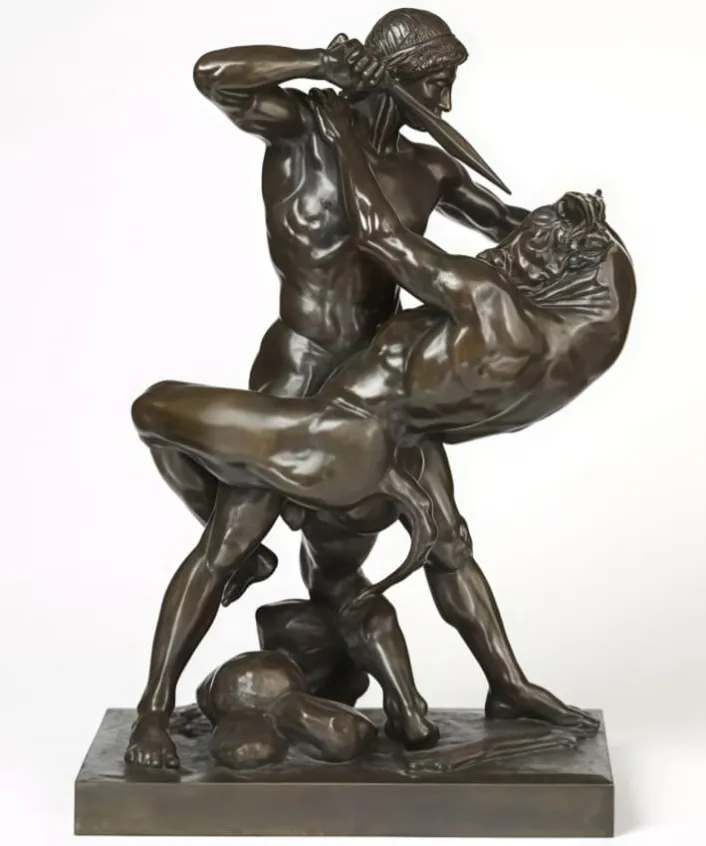
Antonio Canova was born 11 November 1757 in Possagno (now Treviso province) to Pietro Canova, a stonemason. At age 11 he apprenticed with the Venetian sculptor Giuseppe Bernardi (called “Torretto”), and by 17 (1779) was admitted to the Venetian Accademia di Belle Arti. In 1781 (at age 24) he went to Rome to study Classical sculpture and set up his own studio. Early works include Orpheus and Eurydice (1775–77, marble, Venice) and Theseus and the Minotaur (1781–83), which embodied the “noble simplicity and calm grandeur” of classical art.
By the 1780s and 1790s Canova won prestigious commissions. He executed funerary monuments in Rome for Popes Clement XIV (d. 1774; tomb 1783–87) and Clement XIII (d. 1769; tomb 1783–92). These grand obelisks and sculptures in St. Peter's Basilica combined portrait likeness with idealized allegory. He also sculpted a tomb for Maria Christina of Austria (1798–1805, now Ancona). His fame spread across Europe: aristocrats and rulers (Napoleon Bonaparte, his mother Letizia, his sister Paulina, Empress Josephine, etc.) all commissioned Canova marbles. In 1801 Canova's Triumphant Perseus (the first modern sculpture in the Vatican) and his Cupid and Psyche (1793, Louvre) confirmed his renown.
Under Pope Pius VII, Canova was made Inspector General of the Papal collections and reconstructed antiquities. Napoleon commissioned a colossal Napoleon as Mars the Peacemaker (1802–06) and statues of his sisters and family (e.g. Paulina Bonaparte as Venus Victrix, 1805–08, Galleria Borghese). After Napoleon's fall, the pope still retained Canova as architect of Rome's new church of San Biagio in Montebelluna (near his home). In his final years, English patrons (e.g. Lord Dudley and Robert Cooper Lee Bevan) commissioned portraits and altarpieces; King George IV paid for a memorial bust. Canova died 13 October 1822 in Venice. He was buried in the church of Santa Maria Gloriosa dei Frari, and a “Canova Sacrario” was erected at Possagno to house his plaster casts and sketches. (His heart remains in a casket at San Francesco della Vigna, Venice.)
Neoclassical Aesthetic Philosophy and Theoretical Innovations:
Canova's oeuvre represents the visual fulfillment of Neoclassical art theory, yet his work departs significantly from the severe theoretical abstraction seen in Northern European Neoclassicists like Bertel Thorvaldsen. Central to Canova’s philosophy was the theoretical canon established by Johann Joachim Winckelmann, who defined ancient art through the principle of "noble simplicity and quiet grandeur" (edle Einfalt und stille Größe). Canova understood that the direct, unmediated copying of ancient marbles resulted in sterile forms. Instead, he formulated an original synthesis that reconciled ideal beauty (bellezza ideale) with rigorous naturalistic observation (bella natura), infusing stone with subtle psychological warmth (sentimento).
This aesthetic balance was achieved by investigating ancient Greek and Roman prototypes alongside anatomical studies and life drawing. Canova observed composition, light interaction, and atmospheric delicacy from Italian Renaissance and Baroque painting, enabling him to introduce fluid contours and nuanced facial expressions that brought human emotion to classical archetypes.
A defining feature of Canova's professional ethos was his commitment to artistic independence amidst intense political upheaval. Operating through the French Revolution, the Napoleonic Wars, and the European Restoration, Canova consistently insulated his studio practice from political coercion. Although he accepted grand portrait commissions from Napoleon Bonaparte and his family, he maintained close ties with political rivals, including Pope Pius VII, the Austrian Habsburgs, and British statesmen. Canova maintained that art occupied a universal humanistic sphere superior to contemporary geopolitical conflict, enabling him to navigate shifts in European power without compromising his creative autonomy.
Major Works and Visual Analysis:
- Psyche Revived by Cupid's Kiss (1787–1793)
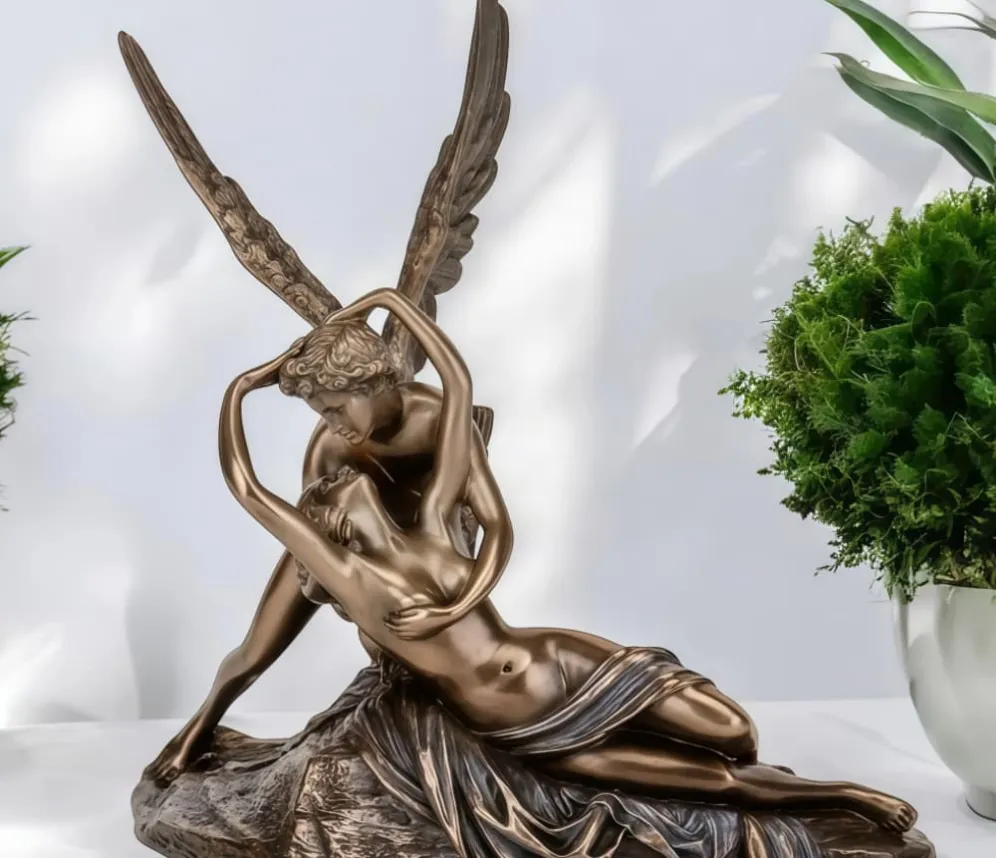
Commissioned by Colonel John Campbell, this iconic sculpture illustrates a tender moment from Apuleius's The Golden Ass. Winged Cupid descends to revive the lifeless Psyche with a gentle embrace and kiss. The compositional composition forms an elegant, intersecting X-shape framed by Cupid's outstretched wings, capturing dynamic motion suspended in grace.
- Venus Victrix (Pauline Bonaparte) (1805–1808)
This semi-nude, life-size portrait depicts Pauline Bonaparte (sister of Napoleon) reclining on a Roman-style couch holding a golden apple. By casting a contemporary political figure in the guise of Venus, Canova merged imperial grandeur with classical myth, creating one of the most alluring marble portraits of the 19th century.
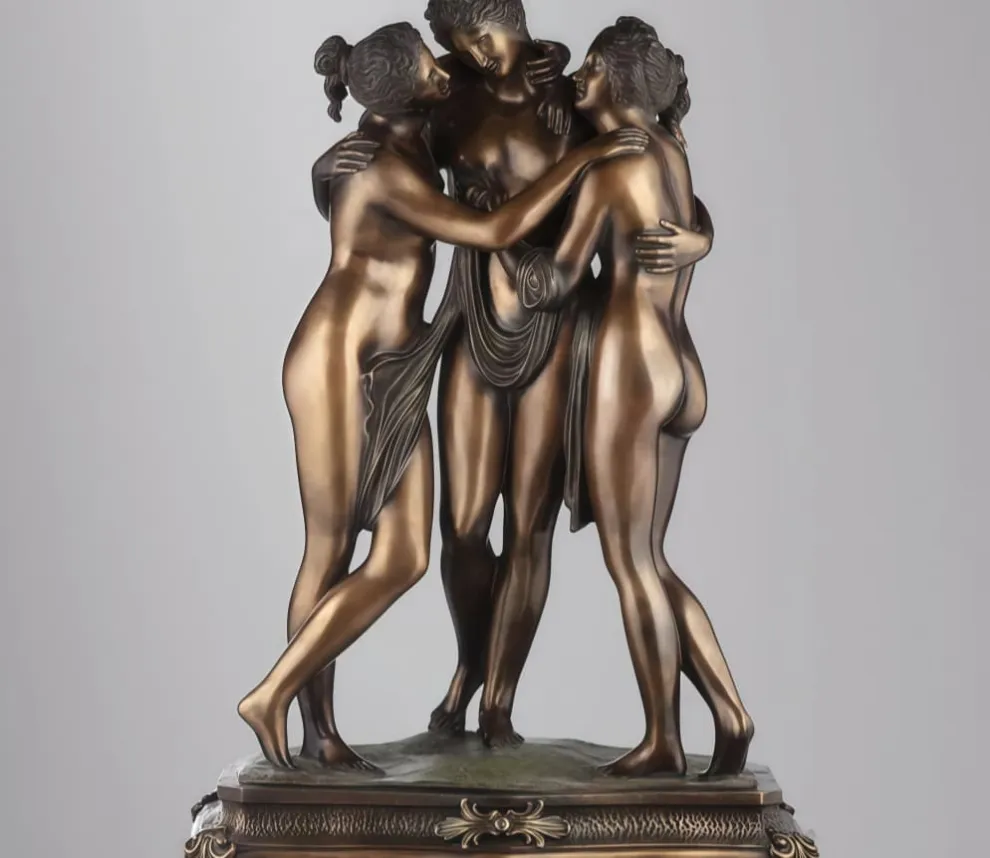
- The Three Graces (1814–1817)
Depicting Euphrosyne, Aglaea, and Thalia—the daughters of Zeus who symbolize joy, charm, and beauty—this masterpiece exemplifies Canova's mastery of fluid lines and intertwined forms. The three nude maidens embrace in a circular rhythm, draped lightly with flowing cloth, uniting strength, symmetry, and sensuality.
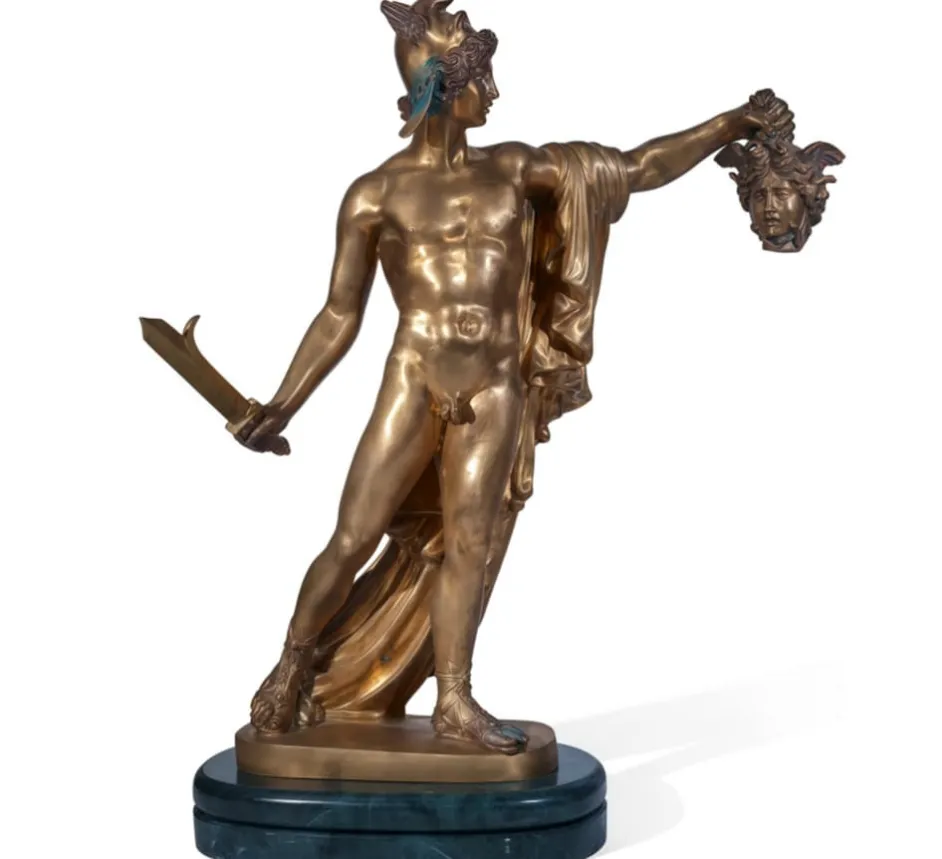
- Perseus Triumphant (1800–1801)
Created in Rome, this statue depicts the mythological hero Perseus holding high the severed head of Medusa. Influenced by the ancient Apollo Belvedere, the sculpture was so highly regarded that Pope Pius VII purchased it to replace classical works looted during the Napoleonic occupation.
Key Masterpieces and Aesthetic Analysis:
Canova's oeuvre encompasses mythological groups, papal monuments, political portraits, and religious statues. By infusing idealized classical forms with tactile vitality, he avoided both cold artificiality and excessive drama, achieving a synthesis of aesthetic purity and subtle sensuality.
Work Title | Creation Period | Medium & Primary Location | Core Aesthetic & Structural Innovation | Historical & Political Context |
Theseus and the Minotaur | 1781–1782 | Marble / Victoria and Albert Museum, London | Depicts reflective repose after conflict; abandons Baroque violence to establish Neoclassical canons | Established Canova's leadership in European Neoclassical sculpture |
Psyche Revived by Cupid's Kiss | 1787–1793 | Marble / Musée du Louvre, Paris | Interlocking X-shaped composition; harmonizes formal elegance with subtle erotic tension | Expresses mythological transcendence; liberates sculpture from fixed single-angle viewing |
Penitent Magdalene | 1793–1796 | Marble & Gilded Bronze / Musei di Strada Nuova, Genoa | Combines marble figure with bronze crucifix and skull (Vanitas); introduces Proto-Romantic grief | Modern interpretation of repentance, exhibiting physical vulnerability and spiritual redemption |
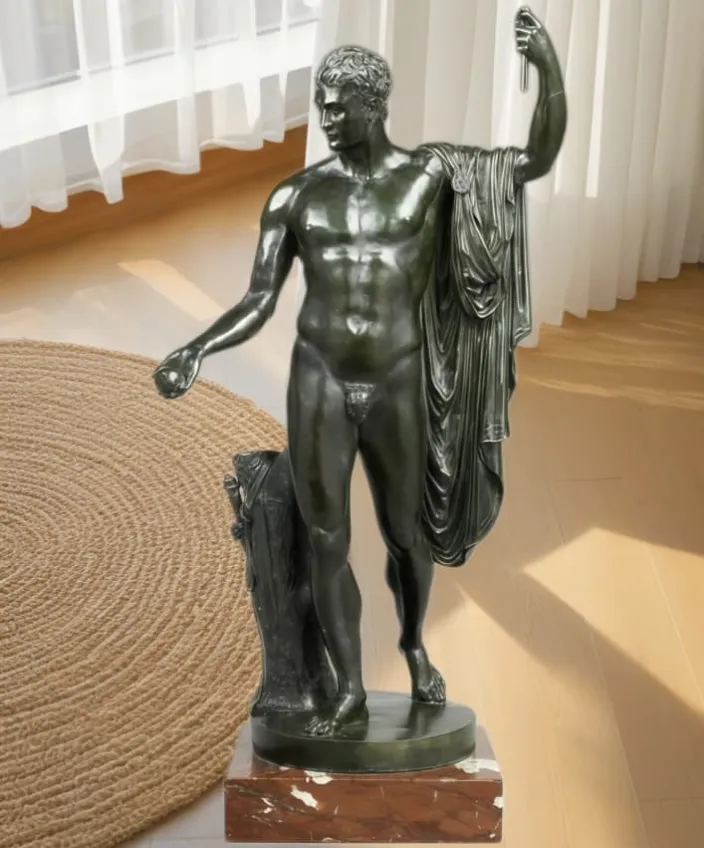
Napoleon as Mars the Peacemaker | 1802–1806 | Marble / Apsley House, London | Monumental heroic nude; adapts imperial portraiture into classical godlike iconography | Rejected by Napoleon due to its uncompromising classical nudity and idealization |
Venus Victrix (Pauline Borghese) | 1805–1808 | Marble / Galleria Borghese, Rome | Semi-nude reclining pose; contrast between smooth skin and detailed marble drapery | Commissioned by the Bonaparte family to assert dynastic prestige via classical mythology |
The Three Graces | 1812–1816 | Marble / V&A, London / NGS, Edinburgh | Intertwined fluid linear composition emphasizing skin contact, rhythm, and light | Commissioned as an embodiment of grace, harmony, and ideal female beauty |
Historiography, Legacy, and Institutional Conservation:
The critical assessment of Canova's sculpture underwent marked transformations over the nineteenth and twentieth centuries. Celebrated across Europe during his lifetime as a master who restored classical sculpture to its peak, his reputation declined with the rise of modernism and early twentieth-century avant-garde movements. Futurists and modern critics dismissed his marbles as cold, academic, and overly polished imitations of ancient art.
A major historiographical rehabilitation began in the mid-twentieth century, spearheaded by art historians Hugh Honour and Mario Praz. Their scholarship demonstrated that Canova was an innovative artist who reinterpreted classical motifs, introduced complex emotional expression, and established modern studio practices.
Today, the primary center for Canova research is the Museo Gypsotheca Antonio Canova in Possagno. The institution preserves his master plaster casts, terracotta bozzetti, anatomical studies, and original carving tools. In 1957, Venetian architect Carlo Scarpa designed a modern exhibition wing for the Gypsotheca. Scarpa's architectural layout uses specialized corner windows to diffuse natural light across Canova's plaster models, echoing the delicate lighting conditions Canova cultivated in his Roman studio.
Conclusion:
Antonio Canova redefined Neoclassical sculpture through formal elegance, rigorous studio practice, and deep engagement with classical philosophy. By uniting Winckelmann's ideal beauty with human observation, he brought life to marble. His production framework—separating master plaster models from assistant carving while reserving l'ultima mano for his own hand—redefined the relationship between artistic design and manual execution. Furthermore, his diplomatic recovery of Italy's looted art established enduring principles for modern cultural heritage protection. Canova remains a monumental figure in Western art history, bridging classical traditions and modern sculptural expression.