Jul 30, 2026News & Insights
Auguste Rodin: The Modernist Revolution in Figurative Sculpture
Today, Auguste Rodin remains one of the most celebrated sculptors worldwide, and his bronze sculptures continue to inspire artists, collectors, museums, and designers.
Introduction: Who Was Auguste Rodin?
Auguste Rodin (1840–1917) was one of the most influential sculptors in the history of Western art. Often regarded as the father of modern sculpture, Rodin revolutionized traditional sculpture by moving away from idealized classical forms and introducing emotional expression, movement, realism, and psychological depth.
Unlike earlier sculptors who focused mainly on perfect human proportions, Rodin explored the complexity of human emotions, inner conflicts, passion, suffering, and the beauty of imperfection.
His masterpieces, including The Thinker, The Kiss, The Burghers of Calais, and The Gates of Hell, transformed bronze sculpture from a decorative art form into a powerful medium of human expression.
Historical Context and Institutional Exclusion:
Born into a working-class Parisian family in 1840, Rodin demonstrated an early aptitude for drawing, entering the Petite École at age fourteen. Despite his foundational skills in drawing and modeling, he was rejected three times by the elite École des Beaux-Arts, an exclusion that redirected his career away from academic patronage. To support himself, Rodin spent over a decade working as an anonymous commercial artisan and decorator. His extended employment in the commercial workshop of Albert-Ernest Carrier-Belleuse provided him with extraordinary technical mastery over clay modeling, plaster casting, marble carving, and large-scale decorative ornament.
A decisive shift occurred in 1875 when Rodin traveled to Italy. Direct engagement with the works of Donatello and Michelangelo altered his approach to the human body. In Michelangelo's unfinished marbles (non finito) and dynamic figures, such as the Dying Slave, Rodin observed how physical tension, muscular distortion, and structural asymmetry could express complex psychological states. Rejecting academic balance, he adopted expressive posturing, anatomical compression, and light-refracting surfaces to convey human vitality.
The Catalytic Controversies: Naturalism, Realism, and Abstraction:
Rodin's career was marked by public controversies that repeatedly challenged the boundaries separating naturalistic modeling, emotional expression, and conceptual abstraction. His public unveilings forced the art world to reconsider traditional definitions of artistic skill, finish, and public memorialization.
- The Age of Bronze (1875–1876) and the Surmoulage Allegation:
Modeled over eighteen months using Belgian telegrapher Auguste Neyt as a live model, The Age of Bronze (L'Âge d'airain) served as Rodin's breakthrough life-size sculpture. First exhibited in Brussels in 1877 under the title The Conquered Man (Le Vaincu), the figure originally held a spear in its left hand and wore a headband, referencing France's defeat in the Franco-Prussian War. Rodin subsequently eliminated these literal props, changing the title to The Age of Bronze to evoke a broader mythic transition from primitive unconsciousness to emotional and intellectual awakening.
When the original plaster was exhibited at the 1877 Paris Salon, its anatomical precision sparked an immediate critical scandal. Salon critics accused Rodin of surmoulage—the process of making direct plaster molds from a living model's body rather than modeling the figure by hand. To vindicate his technical skill, Rodin secured progress photographs of his model taken by photographer Gaudenzio Marconi and gathered formal statements from prominent sculptors attesting to his manual craftsmanship. Once cleared of the charges, the French government purchased the plaster cast for 2,000 francs, cementing Rodin's status as a master of naturalism. The scandal demonstrated that stripping a figure of conventional narrative attributes forced viewers to interpret emotional meaning entirely through the manipulation of the human body.
- Monument to Balzac (1891–1898) and the Transition to Monolithic Abstraction:
In 1891, the Société des Gens de Lettres, under the leadership of novelist Émile Zola, commissioned Rodin to create a posthumous public monument honoring Honoré de Balzac. Rather than producing a conventional portrait showing the author seated at a writing desk, Rodin engaged in seven years of exhaustive research. He visited Balzac’s native region of Touraine to analyze local facial features, located the author's former tailor to obtain exact clothing dimensions, and produced dozens of clay and plaster studies, including headless torsos and explicit nude figures.
For the final design, Rodin draped a plaster-soaked monkish dressing gown—Balzac's characteristic working garment—over a massive nude torso study. He simplified the body into a monolithic, trunk-like column topped by an enlarged head with deep-set eyes, a heavy jaw, and a dynamic brow, prioritizing the author's creative aura over literal physical likeness. When displayed at the 1898 Paris Salon, the plaster was met with public ridicule and critical hostility. Reviewers likened the statue to a "snowman," a "sack of coal," or a "block of salt," and the Société des Gens de Lettres officially rejected the work as a "crude sketch". Deeply hurt, Rodin withdrew the plaster to his private residence in Meudon, refusing to sell it. The monument was not cast in bronze until 1939, twenty-two years after the artist's death, when it was permanently erected at the Boulevard Montparnasse and Boulevard Raspail in Paris.
Formal Innovations and Methodological Revolutions: Rodin introduced technical innovations that expanded the physical and conceptual parameters of modern statuary. These methodologies challenged academic standards and established new paradigms for twentieth-century figurative art.
Comparative Structural Analysis of Primary Sculptural Oeuvre:
Sculpture Title | Initial Context within The Gates | Formal/Technical Innovation | Philosophical/Symbolic Evolution |
The Thinker (Le Penseur) | Tympanum relief representing Dante looking down at Hell | Exaggerated muscular contraction to depict mental labor | Shifted from a specific historical literary figure to a universal archetype of intellectual burden |
The Kiss (Le Baiser) | Relief panel representing the doomed Dantean lovers Paolo and Francesca | Smooth, flowing surface modeling contrasting with dynamic, sensual contact | Transformed from a scene of eternal damnation into an emblem of transcendent romantic devotion . |
The Three Shades (Les Ombres) | Triangular crowning element at the topmost pediment | Triple iteration of a single distorted figure to construct dynamic weight | Reinterpreted dynamic repetition as an expression of inescapable destiny |
Eve | Standalone flank figure meant to frame the door portals | Rough, unpolished surface modeling capturing internal physical grief | Depicts the biblical figure as a sorrowful, vulnerable woman burdened by mortal remorse |
Year: 1880
Material: Bronze
Location: Musée Rodin, Paris
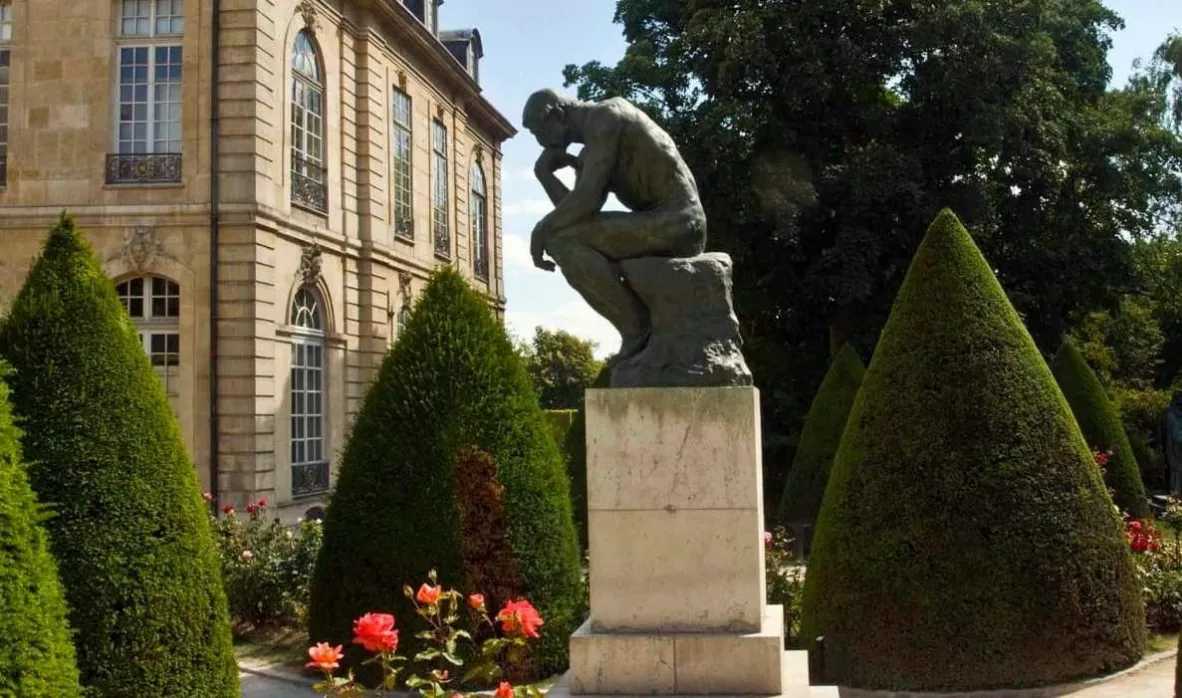
The Thinker is Rodin's most famous sculpture.
Originally created as part of The Gates of Hell, the figure represents Dante Alighieri contemplating the human condition.
The sculpture shows:
A muscular male figure
Sitting in deep thought
Powerful physical strength
Intellectual concentration
The Thinker became a universal symbol of:
Philosophy
Creativity
Intelligence
Human reflection
Today, many museums and public spaces around the world display versions of The Thinker.
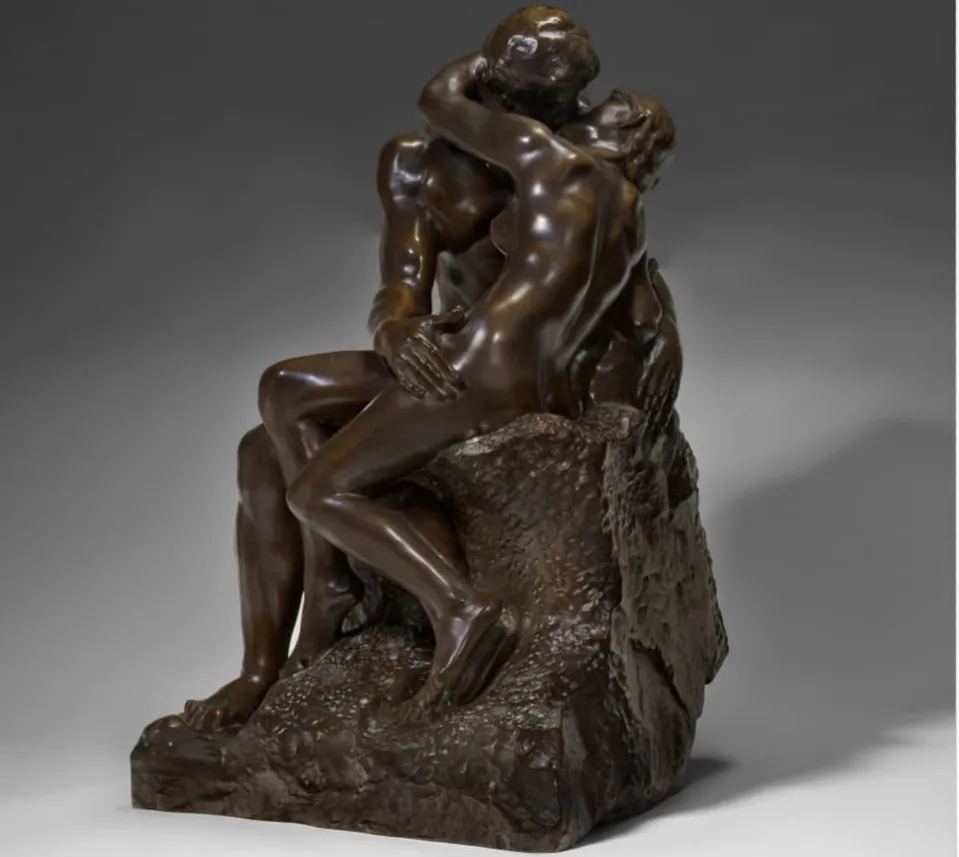
Year: 1882
The Kiss is one of Rodin's most romantic masterpieces.
It depicts Paolo and Francesca, tragic lovers from Dante's Divine Comedy.
The sculpture captures:
Passion
Love
Human connection
Emotional intensity
Unlike traditional romantic sculptures, Rodin focused on the psychological moment between two people.
The natural posture and flowing movement make the sculpture appear alive.
Year: 1889
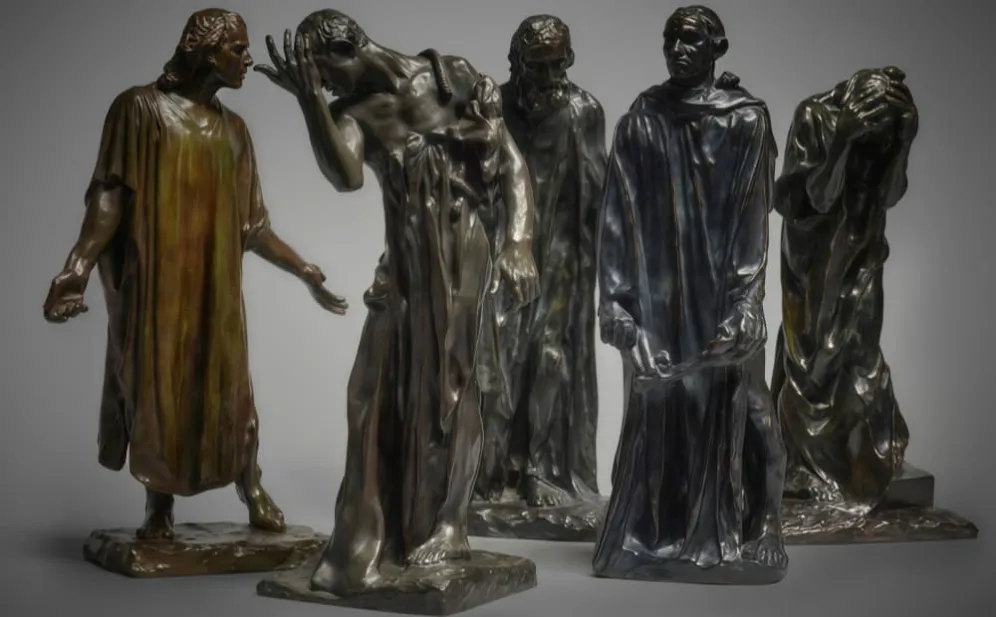
This monumental bronze sculpture represents six citizens of Calais during the Hundred Years' War.
Instead of portraying heroes as powerful and victorious, Rodin showed them as ordinary people experiencing:
Fear
Sacrifice
Courage
Human suffering
This realistic approach was revolutionary.
The sculpture demonstrates Rodin's belief that true heroism comes from human emotion rather than physical perfection.
Created from 1880 onward
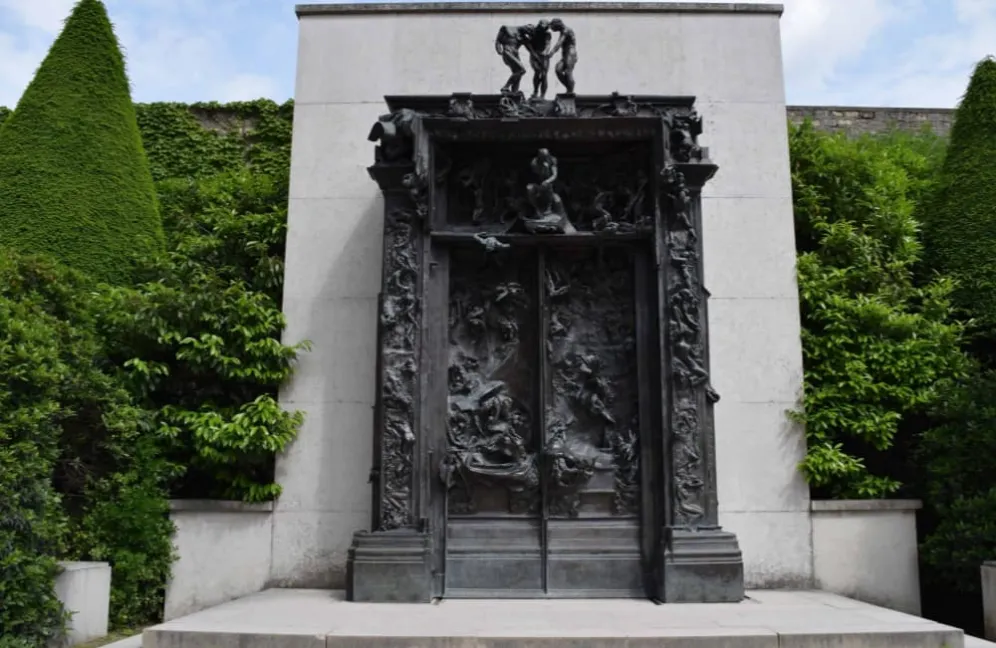
The Gates of Hell was one of Rodin's largest and most ambitious projects.
Inspired by Dante's Divine Comedy, the massive bronze door contains more than 180 figures.
Many famous sculptures originated from this project, including:
The Thinker
The Kiss
The Three Shades
The work represents:
Human suffering
Desire
Sin
Redemption
The Cantor Legacy and Scholarly Expansion:
The global reach and academic study of Rodin's art were significantly expanded through the work of American financier B. Gerald Cantor and his wife, Iris Cantor. Beginning with his first purchase in 1946, Cantor built the world's largest private collection of Rodin sculptures, collecting nearly 750 works, plasters, drawings, and historical documents.
Through the Iris & B. Gerald Cantor Foundation, more than 450 original works were donated to over seventy educational and cultural institutions worldwide. Key public institutions housing major Cantor gifts include:
- Cantor Arts Center at Stanford University: Holds the largest collection of Rodin sculptures outside the Musée Rodin, featuring an extensive outdoor sculpture garden displaying monumental bronzes such as The Gates of Hell, The Burghers of Calais, Adam, Eve, and The Three Shades.
- The Metropolitan Museum of Art (New York): Houses significant gifts of early bronzes, structural plasters, and preliminary drawings.
- Rodin Museum of Philadelphia: Founded by Jules Mastbaum and supported by international museum loans, containing over 120 sculptures, including monumental casts of The Gates of Hell and The Thinker.
- Los Angeles County Museum of Art (LACMA) and North Carolina Museum of Art (NCMA): Maintain dedicated outdoor sculpture courts and indoor display galleries showcasing lifetime and authorized posthumous bronzes.
The Cantor Foundation financed the first complete lost-wax bronze cast of The Gates of Hell cast directly from Rodin's original plasters, completed by the Coubertin Foundry in 1981. Furthermore, Cantor advanced scholarly research by funding academic monographs, exhibition catalogues, and research fellowships in partnership with Stanford art historian Dr. Albert Elsen, cementing Rodin’s position in modern art history.
Conclusion: The Foundations of Modern Sculpture
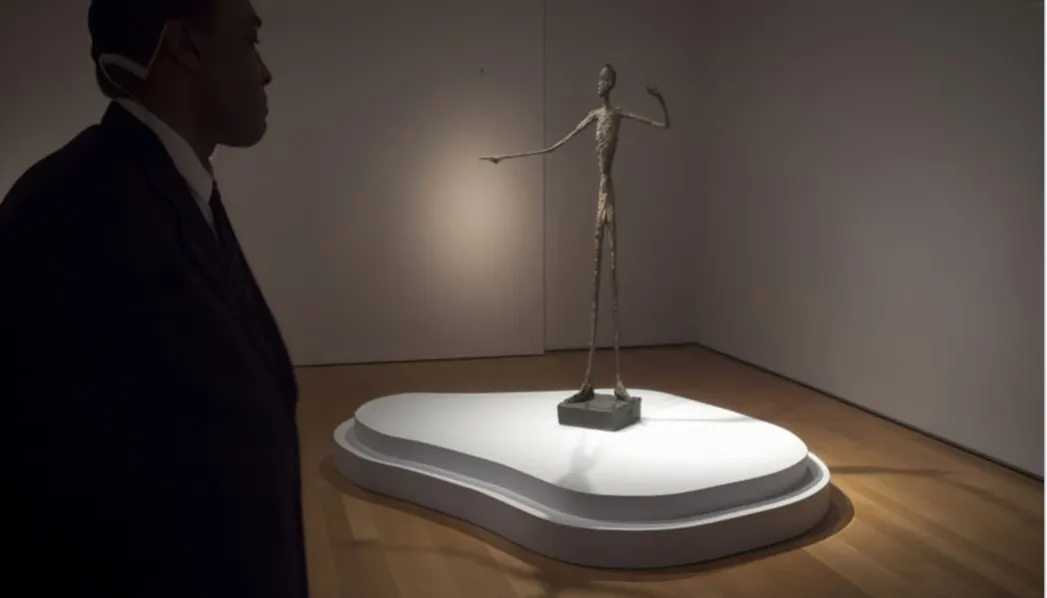
Auguste Rodin transformed figurative art by bridging nineteenth-century academic traditions and twentieth-century modernism. By exposing the physical process of modeling, isolating partial figures, discarding traditional pedestals, and prioritizing psychological truth over idealized finish, he liberated sculpture from literal narrative constraints. His structural innovations, surface handling, and modular assemblage practices directly influenced generations of modern sculptors, including Constantin Brâncuși, Henry Moore, Alberto Giacometti, and Umberto Boccioni. Through these contributions, Rodin established the foundational principle of modern sculpture: that the physical object should project the internal psychological and physical experience of human life.