Jul 26, 2026News & Insights
Bronze or Marble Statue, Which One Is Better?
In this article, we will provide a complete comparison between bronze statues and marble statues to help you make the right decision.
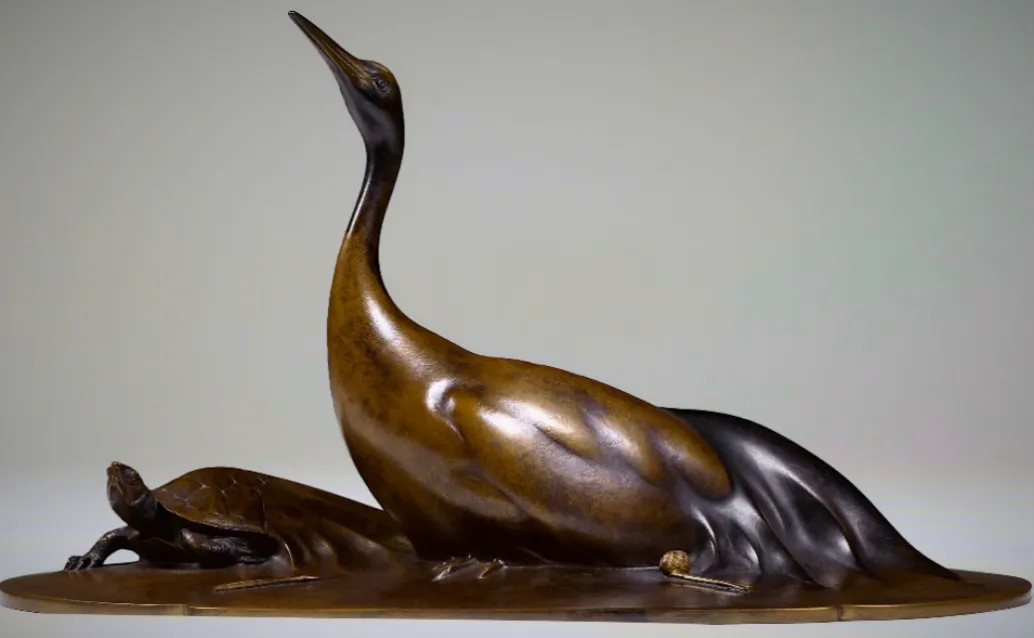
Bronze or Marble Statue, Which One Is Better?
When comparing bronze and marble in sculpture, you are looking at two fundamentally opposing artistic philosophies, structural dynamics, and historical survival stories. Both materials have dominated Western and Eastern art history, yet they demand entirely different techniques and express distinct aesthetic qualities.
Both bronze and marble have been used for thousands of years to create some of the world's most famous sculptures. Marble represents elegance, purity, and classical beauty, while bronze represents strength, durability, and artistic flexibility.
However, the best choice depends on many factors, including design style, installation location, maintenance requirements, budget, and personal preference.
The Artistic Process: Subtractive vs. Additive
The fundamental physical difference between the two mediums lies in how the artist shapes the form:
Marble (Subtractive): Carving marble is a process of elimination. The sculptor starts with a solid block of stone and chips away material. One wrong stroke with a chisel can destroy months of work—there is virtually no room for error.
Bronze (Additive & Casting): Making a bronze statue is an additive and transformational process, usually involving the lost-wax casting method (cire perdue). Sculptors build the initial form in soft clay or wax, allowing endless adjustments, corrections, and fine detail work before creating a mold to pour liquid molten bronze.
Key Difference: Marble sculpting tests precision and patience; bronze casting tests mold-making engineering and metallurgy.
Tensile Strength vs. Expressive Pose:
Physical properties dictate what shapes an artist can build without the sculpture collapsing under its own weight.
Tensile Strength (Bronze): Bronze is a metal alloy (mostly copper and tin) with high tensile strength. Because it can handle tension and bending forces, bronze statues can feature dynamic, outstretched poses, extended limbs, or leaping figures supported on a single thin point.
Compressive Strength (Marble): Marble excels under compression (weight pushing down), but has low tensile strength. Extended arms or legs are prone to snapping off under gravity. This is why classical Greek and Roman marble statues almost always feature struts, tree stumps, or draped fabric touching the ground to support limbs and weight.

Visual Aesthetics: Translucency vs. Patina:
Marble's Subsurface Scattering: Fine statuary marble (like Italian Carrara or Greek Parian) allows light to penetrate roughly 0.5 to 1.5 inches below the surface before refracting outward. This optical phenomenon, known as subsurface scattering, mimics human skin, giving marble sculptures a warm, translucent, soft-focus quality.
Bronze's Reflectivity and Patina: Bronze reflects light off its opaque surface rather than absorbing it, emphasizing sharp shadows, muscle contours, and silhouette over softness. Over time, bronze reacts with atmosphere and weather to form a surface oxide layer called a patina (ranging from deep brown and black to bright green/blue verdigris), which many artists deliberately manipulate.
Durability & Historical Survival:
Interestingly, the material that survives better outdoors in nature survived worse through human history
Dimension | Marble Statues | Bronze Statues |
Outdoors Weathering | Vulnerable to acid rain, freeze-thaw cracking, and erosion over centuries. | Highly resistant to weather; patina acts as a protective shield against deep corrosion. |
Reproducibility | Each piece must be carved individually by hand (unique). | A single master mold can cast multiple identical editions. |
Historical Survival Rate | High survival in ruin sites (though many were burned down for quicklime during the Middle Ages). | Extremely rare survival from antiquity; most ancient Greek bronzes were melted down during wars to cast cannons and weapons. |
Material Differences: Bronze vs Marble:
What Is Bronze?
Bronze is an alloy mainly made of:
Copper
Tin
Other metal elements
It is a strong and flexible material that can be melted and poured into detailed molds.
Bronze allows artists to create:
Fine facial expressions
Realistic clothing details
Complex poses
Hollow structures
Because of its flexibility, bronze is ideal for both realistic and abstract sculptures.
What Is Marble?
Marble is a natural stone formed from limestone under high pressure and temperature.
Its characteristics include:
Natural texture
Unique patterns
Heavy weight
Solid appearance
Marble sculptures are carved directly from stone blocks, meaning artists remove material rather than adding material.
This requires exceptional skill because every carving decision is permanent.

Manufacturing Process Comparison:
Bronze Statue Manufacturing Process
Bronze statues usually involve a complex casting process.
The typical production steps include:
- Design and Clay Modeling
Artists first create a detailed clay or wax model.
- Mold Making
A silicone mold is created based on the original model.
- Wax Casting
A wax version of the sculpture is produced.
- Lost Wax Casting
The wax model is replaced with molten bronze.
- Welding and Finishing
Individual bronze pieces are assembled and polished.
- Patination
Special chemicals are applied to create different colors and surface effects.
- Quality Inspection
The final sculpture is checked for:
Surface details
Structural strength
Color consistency
This process allows bronze sculptures to achieve extremely high levels of detail.
Marble Statue Manufacturing Process:
Marble sculpture production is mainly based on carving.
The process includes:
- Selecting Marble Blocks
Artists choose high-quality marble with suitable texture.
- Rough Cutting
Large pieces of stone are removed.
- Detailed Carving
Artists gradually shape the sculpture using specialized tools.
- Polishing
The surface is polished to achieve a smooth finish.
- Final Inspection
The sculpture is checked for cracks, texture, and overall quality.
Because marble carving is extremely precise, large marble statues often require months or even years to complete.
Detail Expression: Bronze vs Marble:
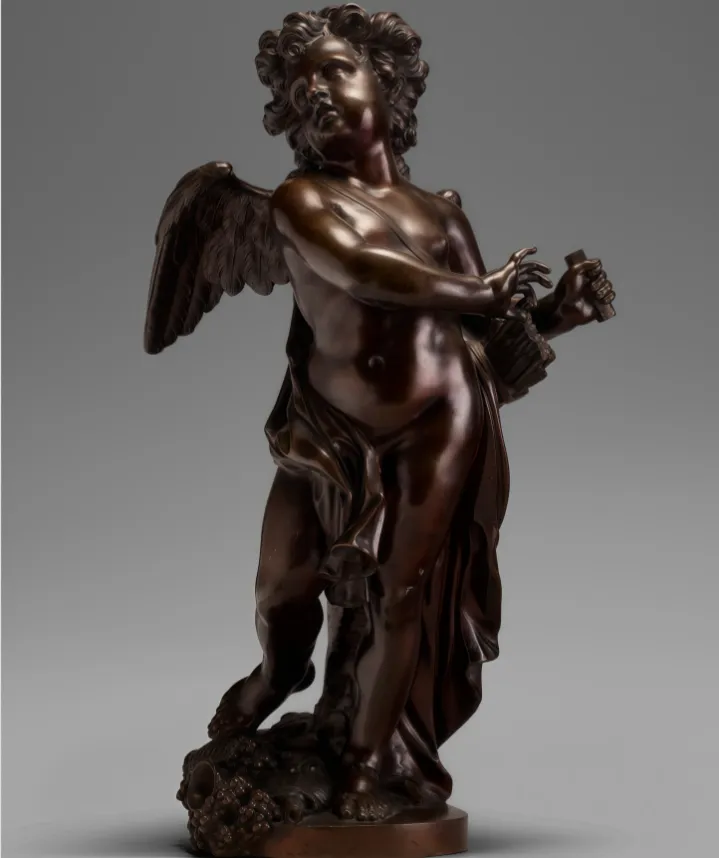
Bronze Advantages
Bronze can capture extremely small details:
Hair texture
Facial expressions
Clothing folds
Animal fur
Muscle structures
Because bronze can be cast into complex shapes, artists have more freedom.
Marble Advantages
Marble creates beautiful smooth surfaces.
It is excellent for:
Human figures
Classical portraits
Elegant statues
However, extremely thin or fragile structures can be difficult because marble may break.
Feature | Bronze Statue | Marble Statue |
Material | Metal alloy | Natural stone |
Production Method | Casting | Carving |
Detail Level | Excellent | Very good |
Outdoor Durability | Excellent | Moderate |
Weight | Lighter | Very heavy |
Installation | Easier | More difficult |
Maintenance | Low | Higher |
Style | Modern & classical | Classical & elegant |
Weather Resistance | Excellent | Requires protection |
Customization | High | Limited |
Lifespan | Hundreds/thousands years | Hundreds years |
Conclusion:
Bronze or Marble Statue, Which Should You Choose?
There is no absolute winner between bronze and marble statues. The right choice depends on your project requirements.
Choose bronze statues if you need:
Outdoor durability
Complex details
Custom designs
Easier installation
Long-term value
Choose marble statues if you prefer:
Classical beauty
Natural stone texture
Luxury indoor decoration
Traditional artistic style
For modern landscape projects, hotels, gardens, and customized artwork, bronze statues are often the more practical and durable choice.
With professional craftsmanship, a high-quality bronze sculpture can become a timeless artwork that lasts for generations.