Jul 24, 2026News & Insights
Bronze vs Resin Sculpture: Which One Should You Choose?
When choosing between bronze and resin for sculptures, buyers, landscape designers, and art collectors often weigh several trade-offs across durability, cost, aesthetics, and long-term value.
When choosing a sculpture for a home, garden, hotel, museum, commercial space, or public project, one of the most common questions is:
Should I choose bronze or resin?
Both materials are popular in the sculpture industry, but they serve very different purposes. Bronze has been admired for thousands of years for its strength, elegance, and investment value, while resin has become increasingly popular due to its affordability, lightweight nature, and design flexibility.
This guide compares bronze vs resin sculptures from every important perspective to help buyers make an informed decision.
What Is a Bronze Sculpture?
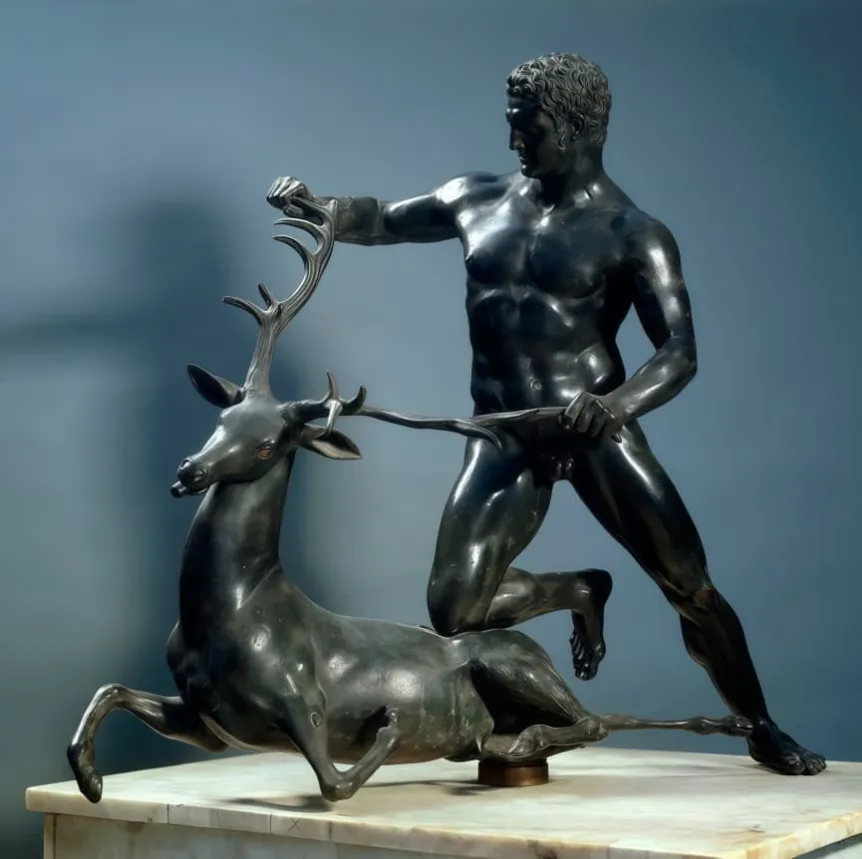
A bronze sculpture is typically made from an alloy consisting of approximately 88% copper and 12% tin, although modern formulas may vary.
Traditional bronze sculptures are produced using the lost wax casting process, a technique that has been used for over 5,000 years.
Characteristics include:
Handcrafted production
Rich metallic appearance
Excellent weather resistance
Long service life
High artistic value
Bronze sculptures are commonly used for:
Public monuments
Garden statues
Memorial sculptures
Religious sculptures
Museum collections
Luxury interior decoration
Hotel and commercial Bronze artwork
What Is a Resin Sculpture?
Resin sculptures are made from synthetic polymers, often reinforced with fiberglass or other materials.
Instead of casting molten metal, resin is poured into molds and cured at room temperature.
Common resin types include:
Polyresin
Epoxy resin
Fiberglass resin
PU (Polyurethane) resin
Resin sculptures are widely used for:
Indoor decoration
Gift items
Movie props
Home accessories
Commercial displays
Theme parks
Retail decoration

Bronze vs Resin Sculpture Key Differences:
Feature / Criteria | Bronze Sculptures | Resin Sculptures (Inc. Cold-Cast Bronze) |
Material Composition | Copper alloy (typically 88% copper, 12% tin) | Synthetic polymer compound (fiberglass/polyresin) |
Manufacturing Process | Lost-wax casting (Cire Perdue) | Silicone mold pouring / Cold-cast composite curing |
Weight & Feel | Heavy, substantial, cold metal feel | Lightweight, easy to transport |
Outdoor Durability | Centuries (handles weather, UV, & impact) | 3–10 years outdoor (susceptible to UV degradation) |
Patina & Aging | Develops rich natural patina over time | Painted surface; can chip or fade under UV light |
Investment Value | High resale/appraisal value, collectible | Decor-oriented; minimal resale value |
Price Point | Premium ($$$$) | Budget to mid-tier ($–$$) |
Manufacturing Process & Craftsmanship:
Bronze (Lost-Wax Casting): Traditional hot-cast bronze involves labor-intensive steps including wax modeling, ceramic shell creation, molten metal pouring at ~1,100°C (2,000°F), metal chasing, and hand-applied chemical patination. This multi-step process makes every piece unique and highly durable.
Resin (Pour Molds & Cold-Cast): Resin is liquid plastic cured with a hardening agent. In "cold-cast bronze" (bonded bronze), real bronze powder is mixed with liquid resin before pouring into a mold. While this mimics the look of solid bronze, it lacks the metallic structure and density of true foundry-cast metal.
Durability & Environmental Performance:
Outdoor Landscapes & Public Installations
Bronze: Bronze thrives outdoors. Exposure to oxygen and moisture forms a natural patina (copper carbonate) that acts as a protective barrier, preventing deep corrosion. It withstands extreme heat, frost, and high-traffic public areas without cracking.
Resin: While waterproof, standard resin degrades under prolonged solar ultraviolet (UV) radiation, leading to surface chalking, color fading, and structural brittleness.
Temperature fluctuations can cause resin to crack if moisture freezes within microscopic fissures.
Weight, Handling, & Shipping Logistics:
Bronze: High density (~8.7 g/cm³) makes bronze wind-resistant and difficult to tip or steal in outdoor public settings. However, it requires higher freight costs and sturdy mounting foundations for large-scale installations.
Resin: Lightweight nature makes handling, domestic shipping, and indoor positioning far simpler and less expensive. It is ideal for temporary displays, indoor wall mounts, or lightweight home accents.
Aesthetics, Surface Finishing, & Aging:
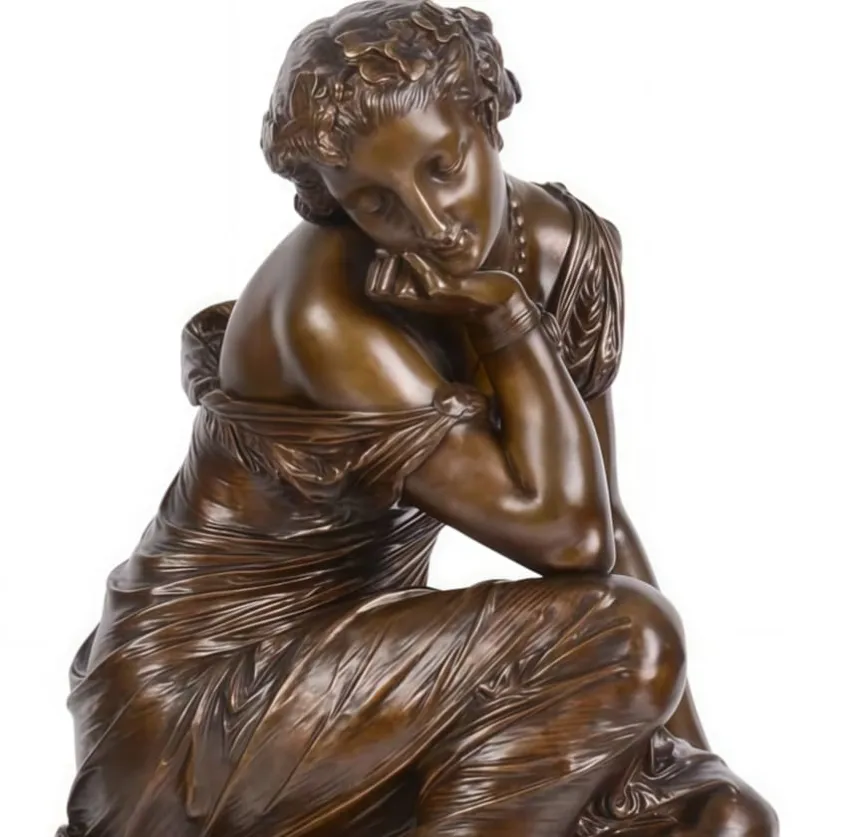
Bronze: Offers a tactile depth and metallic resonance that resin cannot match. The chemical patina process allows artists to achieve nuanced shades (brown, green, black, antique red) that interact dynamically with ambient light over time.
Resin: Excellent at capturing razor-sharp detail from precise silicone molds. However, color relies on surface paints or dyes mixed into the batch. Over time, scratches on resin reveal the underlying white/grey synthetic body, whereas scratches on bronze simply expose raw metal that re-oxidizes naturally.
Commercial Value & Target Audience:
Key Buyer Consideration: Choose based on the project scope — bronze for legacy, public monuments, and high-end outdoor landscaping; resin for accessible interior decoration, commercial props, or budget-conscious projects.
Bronze Target Market: Municipalities, luxury resorts, estate landscapers, fine art collectors, and public memorial committees who prioritize longevity and prestige.
Resin Target Market: Interior decorators, residential retail consumers, event planners, and giftware markets prioritizing affordability and ease of repositioning.
Customization Options:
Both materials can be customized, but each has different strengths.
Bronze
Custom sizes
Personalized patinas
Engraved inscriptions
Museum-quality reproductions
Monumental sculptures
Resin
Bright colors
Lightweight oversized pieces
Complex shapes
Cartoon characters
Rapid prototyping
Environmental Resistance:
Environment | Bronze | Resin |
Rain | Excellent | Good |
Snow | Snow | Fair |
UV Exposure | Excellent | Moderate |
Salt Air | Excellent | Moderate |
Humidity | Excellent | Good |
Wind | Excellent | Fair |
Best Applications:
Bronze Sculpture Is Ideal For
Public parks
City squares
Luxury hotels
Museums
Memorials
Religious institutions
Corporate headquarters
Villas
Gardens
Universities
Resin Sculpture Is Ideal For
Home decoration
Shopping malls
Temporary exhibitions
Retail stores
Theme parks
Event displays
Movie props
Seasonal decorations
Which One Is Better?
The best choice depends on your project goals.
Choose Bronze Sculpture if you need:
Long-term durability
Outdoor installation
Luxury appearance
Investment-grade artwork
Public monuments
Museum-quality craftsmanship
Choose Resin Sculpture if you need:
Lower costs
Lightweight installation
Indoor decorative pieces
Fast production
Temporary displays
Large quantities
Conclusion:
Bronze and resin each offer distinct advantages, but they serve different needs. Bronze stands out for its timeless elegance, exceptional durability, and lasting value, making it the preferred choice for public art, luxury landscapes, hotels, museums, and collectors. Resin, on the other hand, is a practical solution for budget-conscious projects, indoor décor, temporary installations, and lightweight applications.
When evaluating bronze vs resin sculpture, consider your budget, installation environment, desired lifespan, maintenance expectations, and the overall impression you want the artwork to convey. For projects where longevity, prestige, and craftsmanship are priorities, bronze remains the benchmark against which other sculpture materials are measured.