Aug 3, 2026News & Insights
Donatello: The Revolutionary Sculptor of the Early Renaissance
Explore Donatello's life and works: Renaissance sculptor profile with biography, major works, techniques, influence, and scholarship.
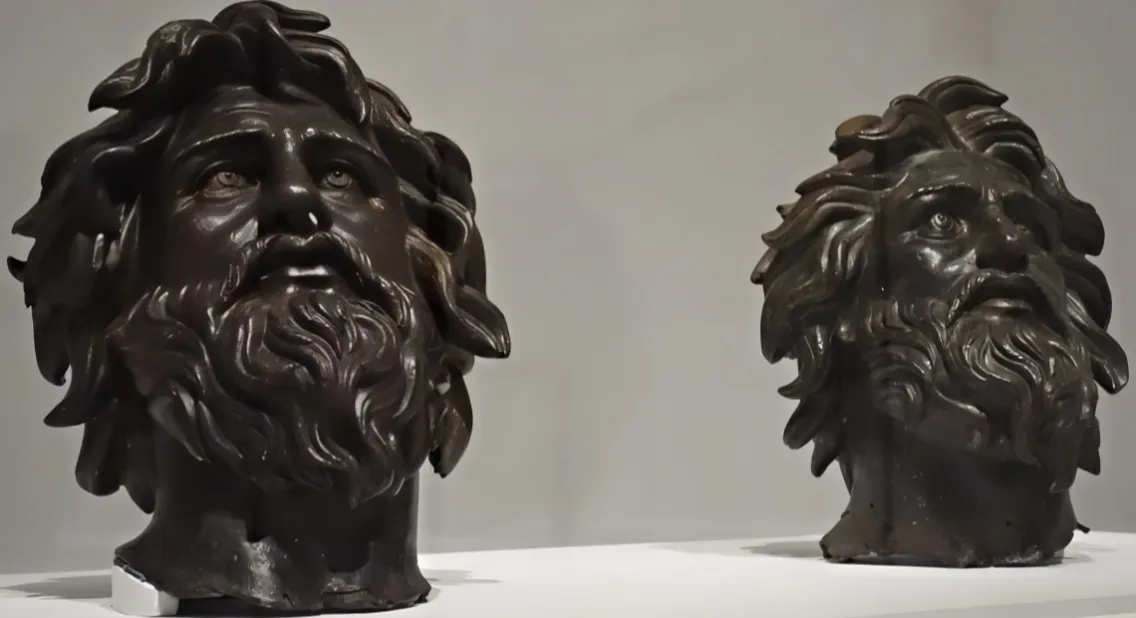
When discussing the greatest sculptors in Western art history, Donatello stands among the most influential masters who changed the direction of sculpture forever. As one of the pioneers of the Italian Renaissance, Donatello brought unprecedented realism, emotional expression, and technical innovation into sculpture. His works transformed traditional medieval religious figures into powerful human-centered artworks that inspired generations of artists.
Early Life and Formative Years:
Born in Florence, Italy, around 1386, Donatello was educated in the house of the noble Martelli family. He received his early artistic training in a goldsmith's workshop before joining the atelier of Lorenzo Ghiberti, where he assisted in crafting the famous bronze doors of the Florence Baptistery.
During his formative years, Donatello formed a close friendship with the architect Filippo Brunelleschi. Together, they traveled to Rome to study classical antiquity—an expedition that profoundly shaped their understanding of Roman architectural proportions, linear perspective, and classical figurative sculpture.
Artistic Innovations and Technical Mastery:
Donatello's genius lay in his ability to combine classical Roman aesthetics with intense human emotion and groundbreaking technical methods:
Rilievo Schiacciato (Flattened Relief): Donatello invented this technique, carving marble with minimal depth—sometimes mere millimeters—while using precise linear perspective to create an illusion of immense spatial depth.
Restoration of Contrapposto: He revived the classical Greek and Roman contrapposto stance, where a figure's weight shifts onto one leg, giving the sculpture a dynamic, lifelike posture.
Psychological Realism: Unlike the idealized, rigid figures of Gothic sculpture, Donatello infused his subjects with human emotion, vulnerability, and individualism.
Famous Sculptures by Donatello:
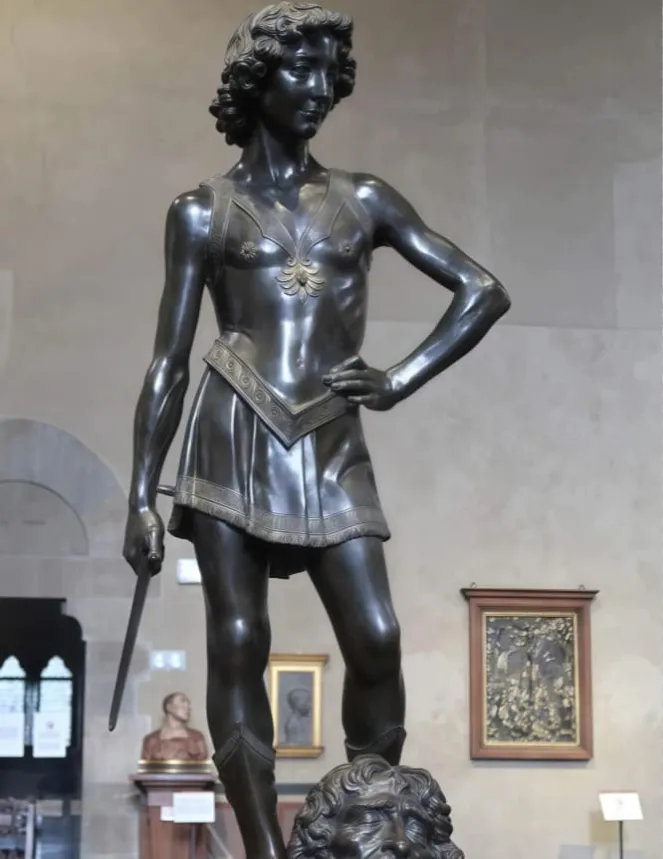
- Bronze David (c. 1430s–1440s)
The Bronze David is perhaps Donatello's most famous masterpiece.
Created in bronze, it represents the biblical hero David after defeating Goliath.
Key Features:
First known free-standing nude male sculpture since antiquity
Strong influence from classical Greek sculpture
Natural human posture
Symbol of courage and victory
The sculpture shocked Renaissance audiences because it represented a return to the classical tradition of the human body.
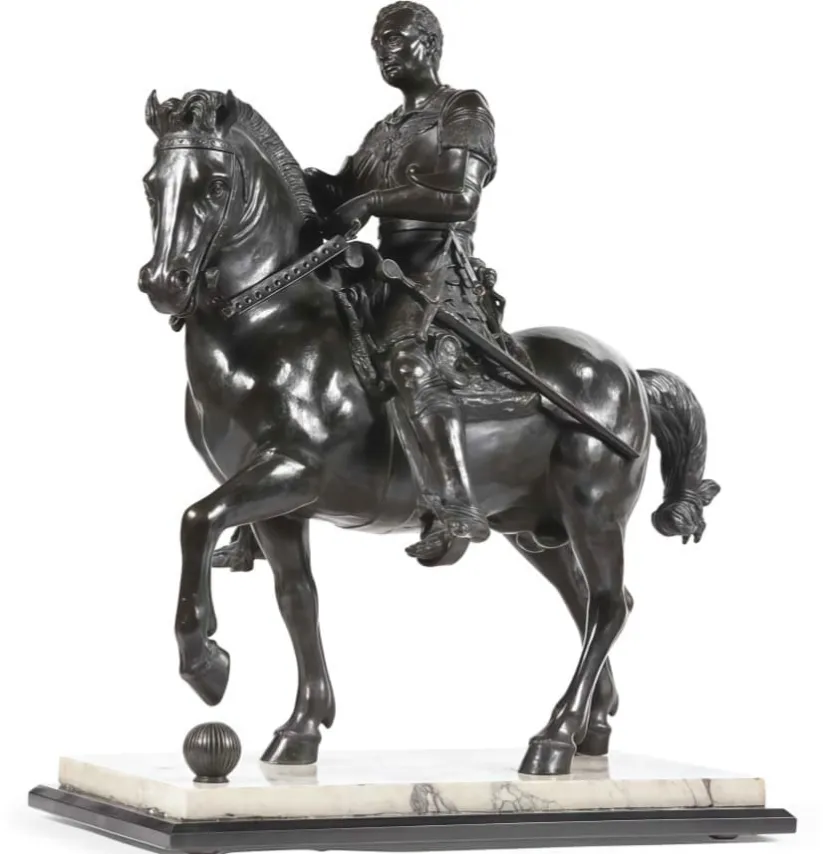
- Gattamelata Equestrian Statue (1453)
Located in Padua, Italy, Gattamelata is one of the greatest equestrian monuments in art history.
The statue depicts:
Erasmo da Narni, a famous military commander.
Importance:
First major Renaissance equestrian monument
Inspired by ancient Roman imperial statues
Demonstrates power, leadership, and human dignity
The sculpture revived the tradition of monumental bronze horse statues after centuries of decline.
The confident posture of the rider and powerful movement of the horse create a timeless symbol of authority.
- Saint Mark (1411–1413)
Created for the church of Orsanmichele in Florence, Saint Mark represents one of Donatello’s early breakthroughs.
The sculpture demonstrates:
Natural standing posture
Realistic clothing folds
Individual facial expression
It marked a major departure from medieval artistic conventions.
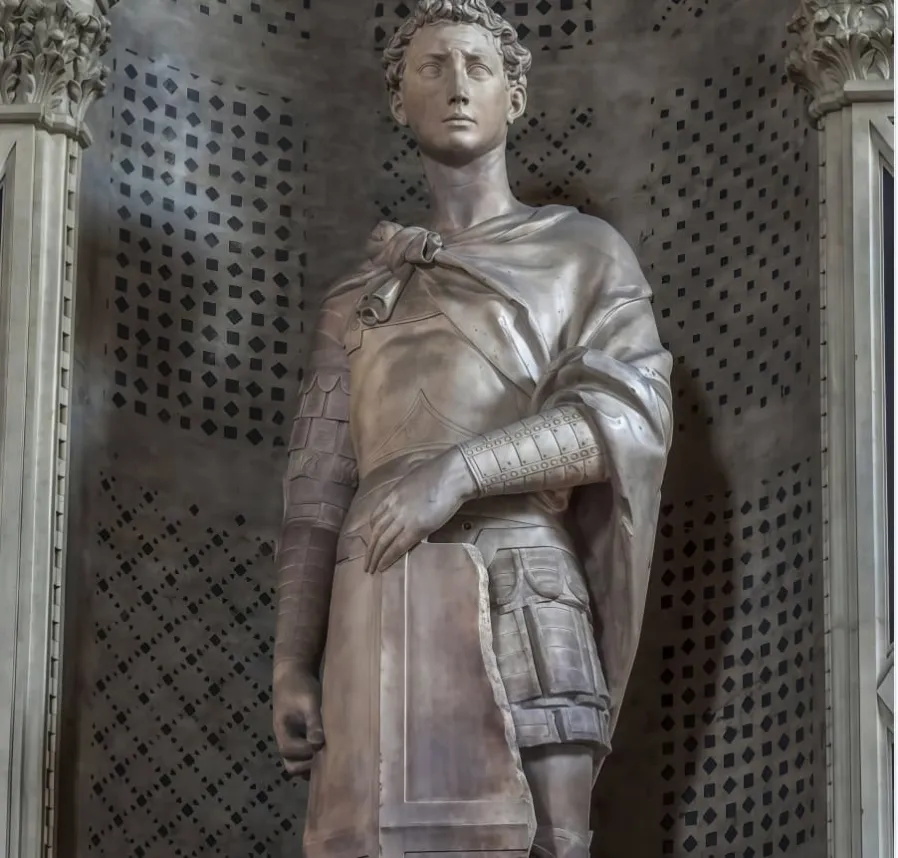
- Saint George (c. 1415–1417)
Saint George is another important early masterpiece.
The sculpture represents:
Courage
Youthful energy
Heroic confidence
Donatello created a figure that feels psychologically alive rather than simply symbolic.
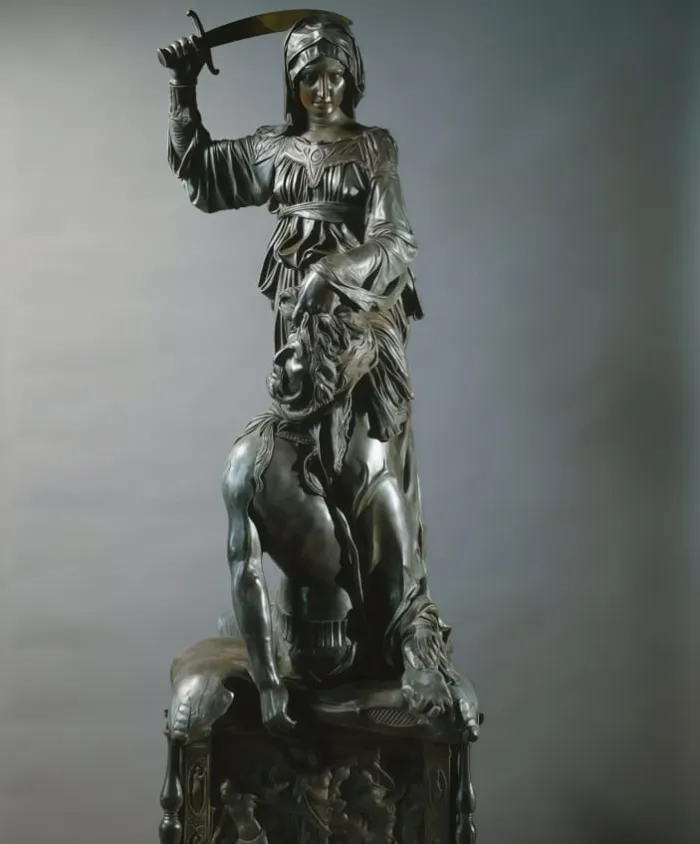
This dramatic bronze sculpture depicts the biblical story of Judith defeating Holofernes.
The work explores:
Power
Violence
Justice
Human determination
Its dynamic composition demonstrates Donatello's ability to express complex narratives through sculpture.
Comparative Synthesis of Key Masterpieces:
The following matrix provides a comparative overview of Donatello's primary works across media, spatial techniques, structural innovations, and patronage contexts:
Work Title | Chronology | Primary Medium | Original Location | Spatial / Technical Innovation | Patronage Context |
Marble David | 1408–1409 (mod. 1416) | Marble | Florence Cathedral / Palazzo della Signoria | Hybrid Gothic sway with early classical naturalism on Goliath's head | Opera del Duomo / Signoria of Florence |
Saint John the Evangelist | 1408–1415 | Marble | Façade niche, Florence Cathedral | Anamorphic optical foreshortening designed for elevated niche viewing | Opera del Duomo |
Saint George and Predella | c. 1417 | Marble | Exterior niche, Orsanmichele | Invention of rilievo schiacciato and early atmospheric perspective | Guild of Armorers (Arte dei Corazzai) |
Reliquary Bust of San Rossore | c. 1422–1425 | Cast bronze, gilded and silvered | Church of Ognissanti, Florence / Pisa | Advanced metal chasing and surface silvering for sacred presence | Monks of Ognissanti |
Lo Zuccone (Habakkuk) | 1423–1425 | Marble | Campanile of Florence Cathedral | Intense psychological realism influenced by Roman Republican portraiture | Opera del Duomo |
The Feast of Herod | c. 1423–1427 | Cast gilded bronze relief | Siena Baptistery Baptismal Font | Linear perspective grid combined with continuous narrative and varied relief depths | Opera del Duomo of Siena |
Bronze David | c. 1430s–1440s | Cast bronze with traces of gilding | Courtyard, Palazzo Medici | First freestanding male nude since antiquity with sensual modeling | Cosimo de' Medici |
Equestrian Statue of Gattamelata | 1443–1453 | Cast bronze | Piazza del Santo, Padua | Revival of ancient imperial bronze equestrian monumentality | Family of Erasmo da Narni / Venetian Republic |
Penitent Magdalene | c. 1455 | Polychromed wood | Florence Baptistery | Ascetic realism using textured wood carving to convey spiritual anguish | Florence Baptistery / Opera del Duomo |
Judith and Holofernes | c. 1457–1464 | Cast bronze | Palazzo Medici / Piazza della Signoria | Dynamic multi-faceted freestanding group expressing dramatic narrative | Medici Family |
Legacy, Historiography, and Scholarly Impact:
Donatello redefined the status of the artist during the transition from the medieval guild system to Early Modern Humanism. While guild rules regulated working conditions and craftsmanship standards, records indicate Donatello consistently demanded artistic independence, selecting commissions that permitted creative experimentation. Though not a formally educated scholar, his intimate collaboration with humanists enabled him to visually translate ancient literary and philosophical concepts.
His stylistic innovations profoundly shaped subsequent generations of Italian artists. In sculpture, workshop assistants and younger contemporaries, such as Desiderio da Settignano, Andrea del Verrocchio, and Antonio Pollaiuolo, adopted his schiacciato technique, anatomical precision, and bronze-casting methods. In painting, Donatello's sculptural rendering of physical volume and spatial perspective influenced masters like Masaccio, Andrea del Castagno, and Andrea Mantegna. Mantegna's mastery of spatial perspective in Padua was directly informed by Donatello's Northern Italian bronzes.
During the High Renaissance, Michelangelo Buonarroti studied Donatello's marble carvings closely. Michelangelo's monumental David and his seated Moses directly inherit the anatomical energy and foreshortened monumentality first established in Donatello's Saint John the Evangelist and Campanile prophets. In his 1550 Lives of the Most Excellent Painters, Sculptors, and Architects, Giorgio Vasari recognized Donatello as the crucial bridge between the Early Renaissance and the High Renaissance, asserting that his sculptures possessed a vitality indistinguishable from nature itself. Contemporary art historical consensus affirms that Donatello was the most radical innovator of the Quattrocento, transforming sculpture into an autonomous medium capable of articulating human emotion and spatial reality.
Conclusion:
Donatello's career documents the birth of Early Renaissance sculpture. Through his mastery of varied materials—from carved marble to cast gilded bronze and sculpted wood—he expanded the technical and expressive boundaries of visual art. His technical inventions, specifically rilievo schiacciato and the integration of mathematical linear perspective into relief carving, bridged the gap between three-dimensional sculpture and two-dimensional pictorial space.
Moreover, Donatello brought an unprecedented psychological depth to his subjects. Whether rendering the youthful confidence of the bronze David, the moral tension of Lo Zuccone, or the tragedy of The Feast of Herod, he anchored sacred narratives in human emotion. Donatello redefined the relationship between the artwork, its surrounding space, and the observer, establishing visual paradigms that held sway over European art for generations