Jul 27, 2026News & Insights
Cast Bronze vs Forged Bronze: What is the Differences, Advantages, and Applications?
Understanding the differences between cast bronze vs forged bronze helps artists, architects, collectors, designers, and buyers make better decisions when selecting bronze products.
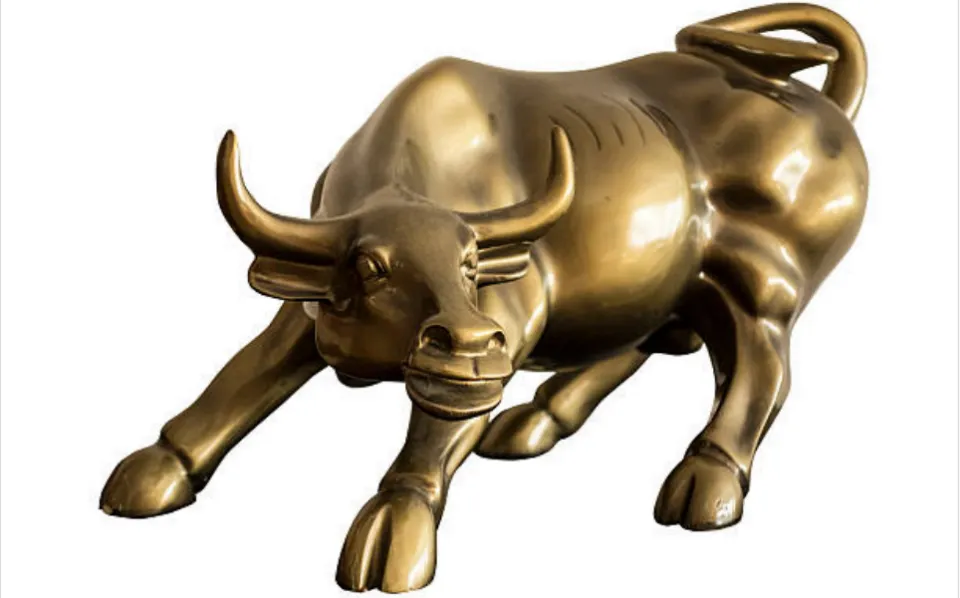
When selecting bronze components—whether for high-stress industrial machinery, architectural features, or fine artistic sculptures—the manufacturing process dictates the metal's performance, appearance, and overall durability. The debate between Cast Bronze and Forged Bronze comes down to a fundamental trade-off: geometric design freedom versus structural grain refinement.
Manufacturing Process & Mechanics:
The essential difference lies in the state of the metal during shaping: liquid liquid-phase solidifying vs. solid-phase deformation.
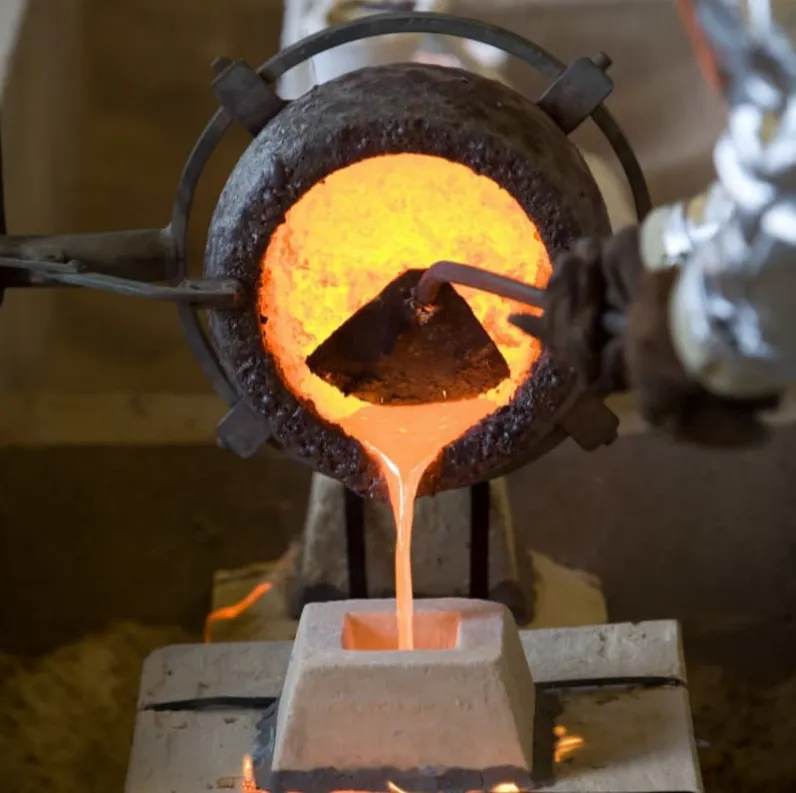
Cast Bronze (Liquid Phase)
The Method: Bronze ingots are melted in a furnace at temperatures exceeding 1,000°C (1,832°F) until liquid. The molten alloy is poured into a prepared mold (sand casting, investment/lost-wax casting, or die casting) and allowed to cool and solidify into the final shape.
Grain Structure: During cooling, metal grains grow outwards from the mold walls, creating a cast dendritic structure. While uniform in bulk, cast bronze can occasionally contain micro-porosity or gas pockets if cooling rates are not strictly controlled.
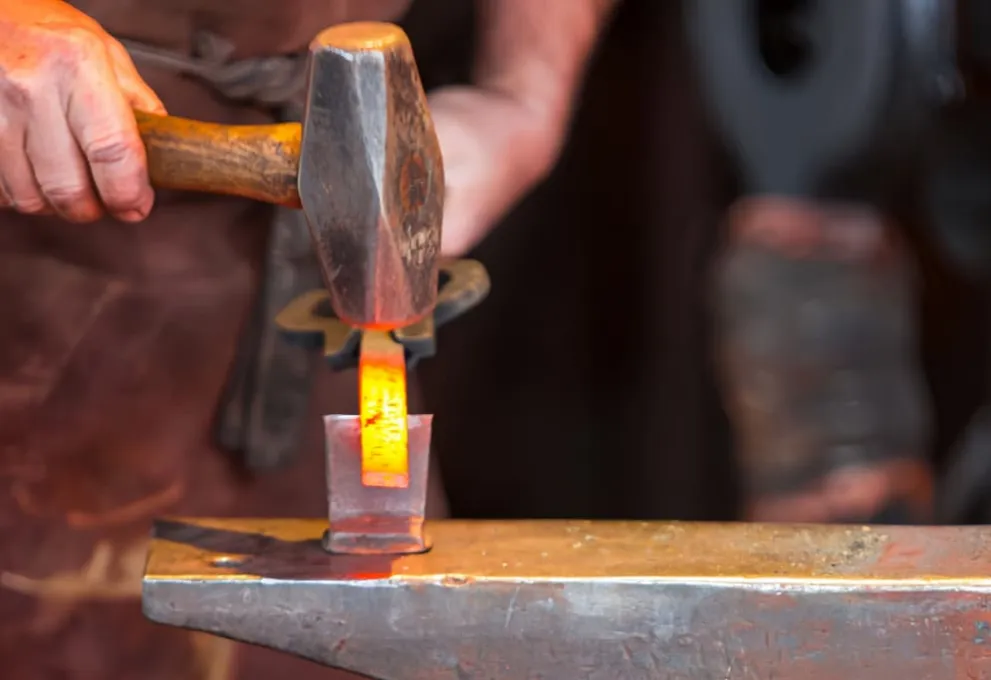
The Method: Solid bronze billets or stock bars are heated to a malleable plastic state—typically around 650°C to 800°C—well below the melting point. High-pressure hydraulic presses, drop hammers, or mechanical dies exert severe compressive forces to physically deform and shape the metal.
Grain Structure: The extreme pressure breaks down cast grain structures, compressing micro-voids and aligning the metal's grain flow continuously along the contours of the component.
Core Comparison Across Key Dimensions:
Attribute | Cast Bronze | Forged Bronze |
Design Complexity | Unlimited. Can produce hollow forms, intricate undercuts, organic shapes, and complex internal channels. | Restricted. Best suited for simpler, symmetrical, or linear geometries due to die-flow limits. |
Tensile Strength & Toughness | Moderate to High (alloy dependent). Prone to internal micro-porosity. | Superior. Grain alignment provides up to 20–30% higher tensile and impact strength. |
Fatigue Resistance | Moderate. Micro-voids can act as stress concentration points under cyclic loading. | Exceptional. Dense, void-free grain flow resists cracking under repetitive stress. |
Surface Finish & Detail | Captures ultra-fine surface details, textures, and artist tool marks directly from the mold. | Smooth, smooth-contoured surfaces; fine artistic textures require post-forging chasing or engraving. |
Tooling & Setup Cost | Low to Moderate (especially for sand or investment casting). Ideal for custom/low-volume pieces. | High upfront die tooling costs. Best cost efficiency achieved in high-volume production runs. |
Material Waste | Minimal. Gating systems and sprues can be remelted directly. | Low to Moderate (flash trimming required in closed-die forging). |
Material Science & Mechanical Integrity:
The Grain Flow Advantage: Forging compresses the internal structure of the bronze, eliminating gas porosity and shrinkage voids typical of molten cooling. This process yields higher yield strength, superior ductility, and greater resistance to wear, cavitation, and fatigue failure.
However, modern casting methodologies (such as vacuum investment casting or centrifugal casting) have significantly minimized cast defects, allowing cast bronze alloys—such as Manganese Bronze or Silicon Bronze—to achieve remarkable mechanical integrity for structural uses.
Ideal Application Scenarios:
Artistic & Architectural Sculptures: Lost-wax investment casting remains the gold standard for producing complex, fine-art statues, life-sized bronzes, and decorative monuments.
Intricate Engineering Components: Pump impellers, complex valve bodies, large marine propellers, and fittings with internal fluid passages that cannot be machined or forged easily.
Custom or Low-Volume Runs: Economical for one-off bespoke pieces or limited artisan production runs without expensive forging dies.

When to Choose Forged Bronze?
Heavy Industrial & Aerospace Parts: Heavy-duty bearing bushings, landing gear components, wear plates, and high-load gear blanks subject to intense wear and shock loads.
High-Pressure Marine Hardware: Fasteners, valve stems, and structural fittings exposed to severe cyclic marine stresses and corrosive environments.
High-Stress Architectural Hardware: High-traffic door handles, heavy hinges, and structural decorative joinery where impact resistance is critical.
Appearance Differences:
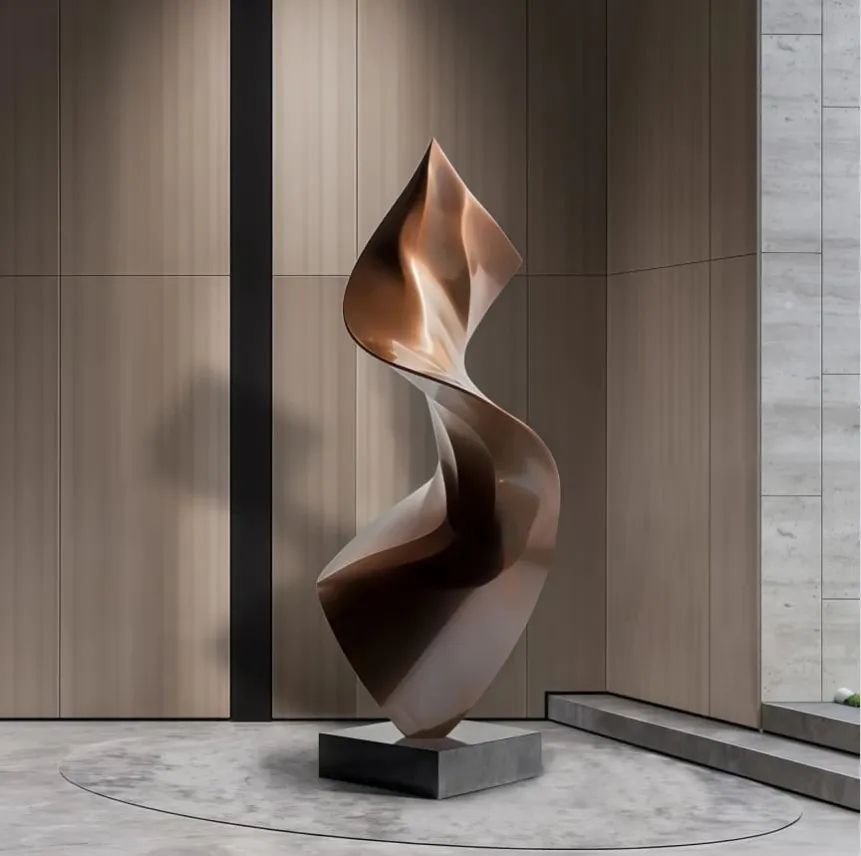
Cast Bronze Appearance
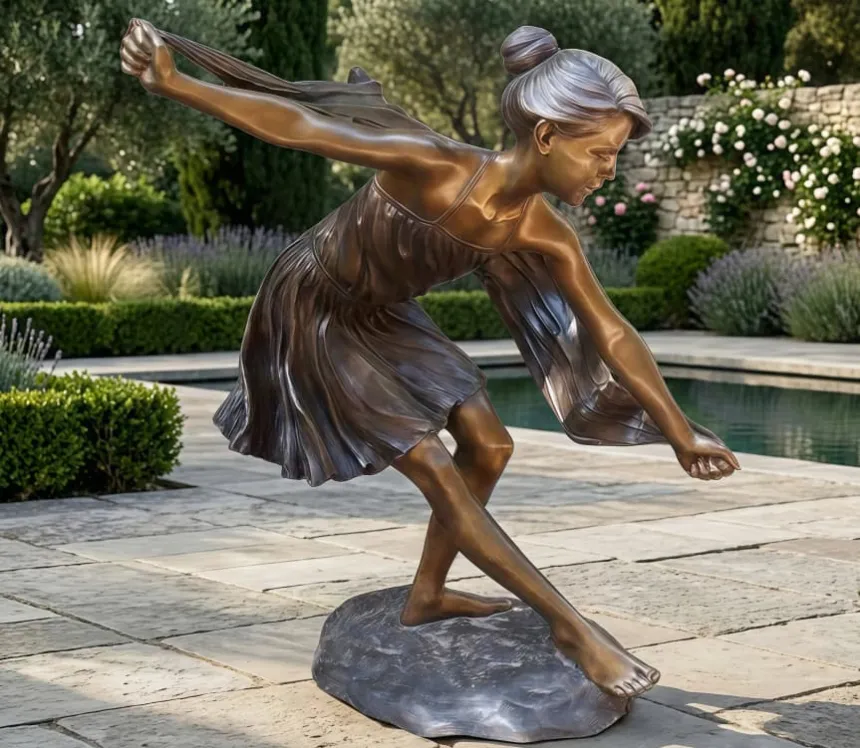
Cast bronze is preferred for artistic applications because it can reproduce extremely fine details.
Advantages:
Realistic facial features
Detailed textures
Complex artistic forms
Smooth curves
Organic shapes
Forged Bronze Appearance
Forged bronze has a more industrial and solid appearance.
Because the metal is mechanically shaped, it usually has:
Cleaner surfaces
Stronger structural appearance
Less artistic complexity
Forged bronze is commonly used for:
Hardware components
Marine parts
Industrial applications
Durability and Weather Resistance:
Cast Bronze Outdoor Performance
Bronze casting is widely used for outdoor sculptures because bronze naturally develops a protective patina layer.
Benefits:
Resistant to rain
Resistant to UV exposure
Resistant to corrosion
Requires minimal maintenance
Many bronze statues can last:
Hundreds of years with proper installation.
Forged Bronze Durability
Forged bronze generally offers higher mechanical durability.
It performs better under:
Heavy loads
Continuous stress
High-pressure environments
Which One Should You Choose?
Choose Cast Bronze If You Need:
Sculpture artwork
Custom designs
Decorative statues
Architectural decoration
Detailed artistic pieces
Choose Forged Bronze If You Need:
Maximum strength
Mechanical reliability
Industrial components
High-pressure applications
Conclusion:
Both cast bronze and forged bronze have unique advantages.
Cast bronze is the preferred choice for artists, designers, architects, and collectors because it provides unmatched flexibility, artistic detail, and timeless beauty.
Forged bronze is better suited for industrial applications where strength, toughness, and mechanical performance are the highest priorities.
For bronze sculptures, monuments, and decorative artwork, cast bronze remains the traditional and most widely used manufacturing method due to its ability to transform creative ideas into highly detailed and durable works of art.