Jul 29, 2026News & Insights
Michelangelo as a Master Sculptor: Anatomy, Philosophy, and Legacy
Discover Michelangelo, the greatest Renaissance sculptor. Explore his famous sculptures, artistic techniques, masterpieces like David and Pietà, and his lasting influence on modern sculpture.
Michelangelo Buonarroti (1475–1564) remains the defining figure of High Renaissance sculpture. While he was a accomplished painter, architect, and poet, Michelangelo famously considered himself first and foremost a sculptor. His revolutionary approach to Carrara marble transformed raw stone into living human form, forever changing the trajectory of Western art.
Michelangelo: The Genius Sculptor Who Defined Renaissance Art
When discussing the greatest sculptors in human history, Michelangelo Buonarroti is a name that stands above almost all others. His extraordinary understanding of the human body, emotional expression, and artistic perfection transformed sculpture from a craft into a powerful form of human expression.
Born during the Italian Renaissance, Michelangelo created some of the world's most celebrated masterpieces, including David, Pietà, and Moses. His sculptures represent the perfect combination of technical skill, anatomical accuracy, spiritual depth, and emotional intensity.
Although Michelangelo was also a painter, architect, and poet, he always considered himself primarily a sculptor. His lifelong pursuit was to reveal the beauty hidden inside stone and transform raw material into living human forms.
The Early Life of Michelangelo: The Birth of a Renaissance Master
Michelangelo di Lodovico Buonarroti Simoni was born on March 6, 1475, in Caprese, Italy. He grew up in Florence, the cultural center of the Renaissance, where art, science, and humanism flourished.
At a young age, Michelangelo showed exceptional artistic talent. He studied under the famous painter Domenico Ghirlandaio and later entered the artistic circle of Lorenzo de’ Medici, one of the greatest supporters of Renaissance art.
During his early years, Michelangelo studied:
Classical Greek and Roman sculptures
Human anatomy
Drawing techniques
Marble carving methods
The relationship between movement and emotion
These experiences formed the foundation of his unique sculptural language.
Michelangelo's Artistic Philosophy: "Freeing the Figure From Stone"
One of Michelangelo's most famous artistic beliefs was that the sculpture already existed inside the stone, and the sculptor's role was simply to remove the unnecessary material.
Unlike many artists who focused only on external beauty, Michelangelo explored the connection between:
Human anatomy
Inner emotions
Spiritual meaning
Psychological strength
His sculptures are not merely realistic representations of people. They express courage, suffering, hope, and human greatness.
This approach created a new standard for Renaissance sculpture.
The Most Famous Michelangelo Sculptures:
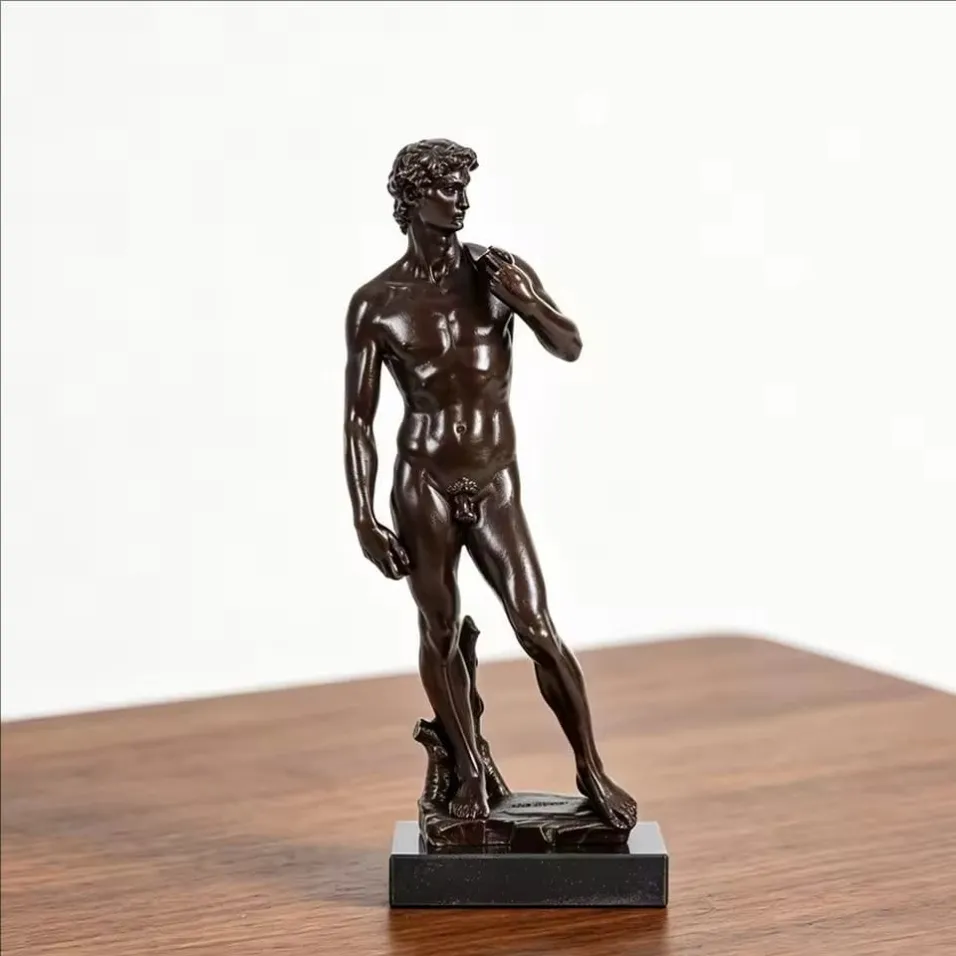
- David: The Symbol of Strength and Human Potential
Created between 1501 and 1504, David was carved from a single block of marble and stands over 5 meters tall. Originally commissioned for Florence Cathedral, the sculpture later became a symbol of the city of Florence.
Artistic Features of David:
Perfect Human Anatomy
Michelangelo carefully studied muscles, bones, and body proportions. The sculpture shows incredible details:
Strong shoulders
Defined muscles
Natural posture
Realistic facial expression
Psychological Expression
Unlike traditional images of David after victory, Michelangelo captured David before the battle with Goliath.
The expression shows:
Concentration
Confidence
Courage
Determination
This made David not only a physical masterpiece but also a symbol of human intelligence and strength.
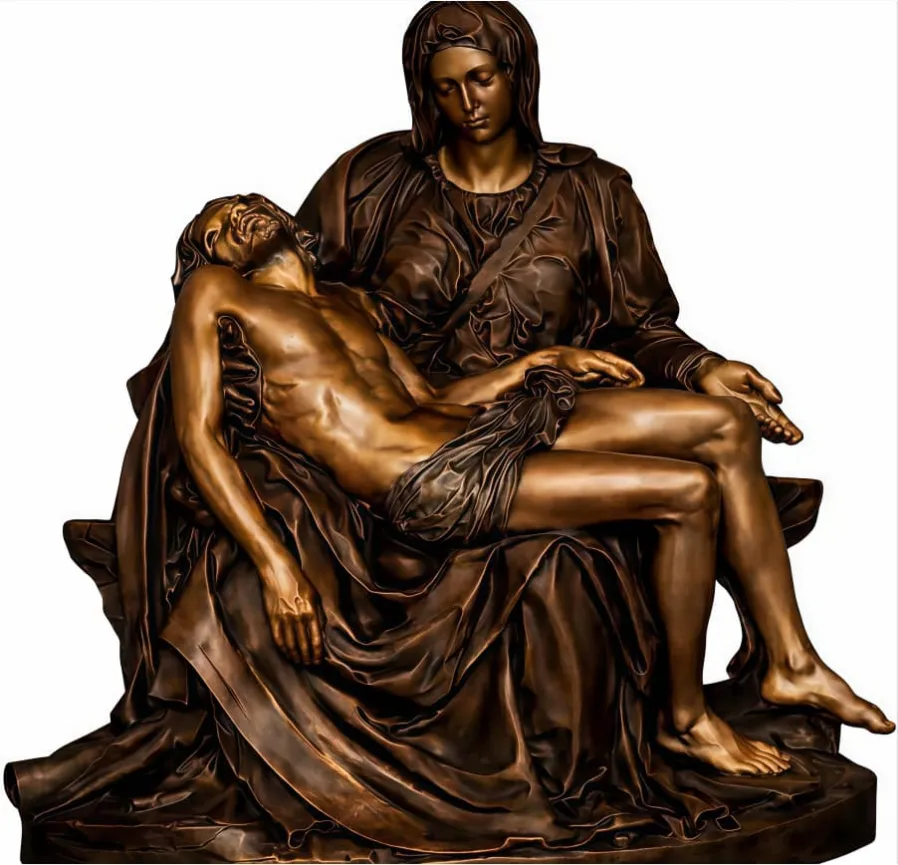
- Pietà: A Masterpiece of Compassion and Emotion
The Pietà sculpture was created around 1498–1499 when Michelangelo was only about 24 years old. It depicts the Virgin Mary holding the body of Jesus after the crucifixion.
The sculpture demonstrates Michelangelo's extraordinary ability to express emotion through marble.
Key characteristics include:
Smooth marble surfaces
Elegant clothing details
Emotional tenderness
Perfect balance between sadness and beauty
Unlike many religious artworks that focus on tragedy, Pietà presents a peaceful and compassionate interpretation of suffering.
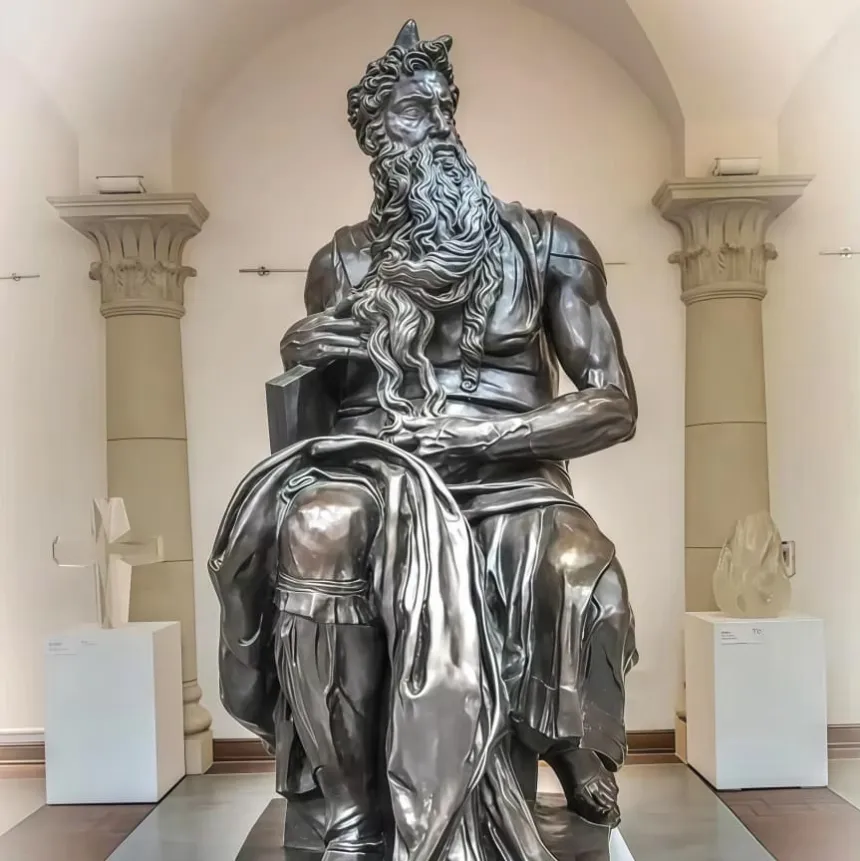
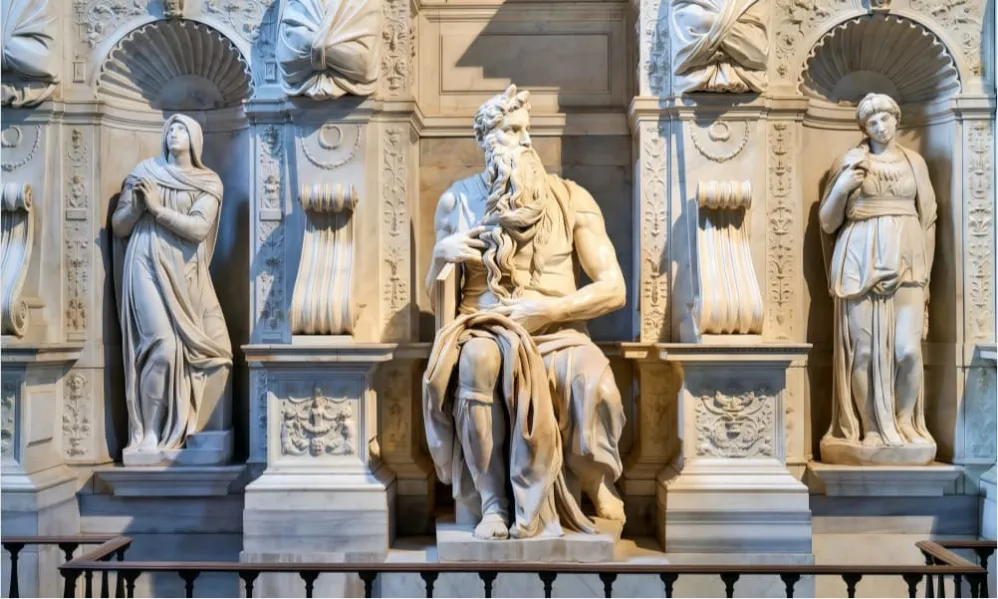
- Moses: The Power of Spiritual Leadership
The Moses sculpture was created for the tomb of Pope Julius II.
The sculpture represents Moses as a powerful leader with:
Strong physical presence
Serious facial expression
Dynamic posture
Spiritual authority
The detailed carving of the beard, muscles, and clothing demonstrates Michelangelo's mastery of marble sculpture.
Comparative Masterworks:
Michelangelo's career produced several benchmark works that defined distinct periods of his artistic evolution.
Work | Created | Location | Key Artistic Innovation |
Pietà | 1498–1499 | St. Peter's Basilica, Vatican | Pyramid composition; extreme fabric drapery; polished, lifelike flesh texture |
David | 1501–1504 | Galleria dell'Accademia, Florence | Monumental scale (17 ft); psychological tension captured before action |
Moses | 1513–1515 | San Pietro in Vincoli, Rome | Dynamic sitting posture; intricate beard carving; intense muscular realism |
Michelangelo's Unique Sculpture Techniques:
Michelangelo's success came from his unmatched technical skills.
- Understanding Human Anatomy
Michelangelo studied the human body through detailed observation and anatomical research.
His sculptures show:
Accurate muscle structures
Natural movement
Realistic body proportions
This anatomical knowledge allowed him to create figures that appear alive.
- Mastery of Marble Carving
Michelangelo preferred Carrara marble because of its:
Pure white appearance
Fine texture
Ability to capture light
His carving process involved:
Selecting the perfect stone
Creating preliminary sketches
Removing large sections of marble
Refining details
Polishing the final surface
Every cut was carefully planned.
- Creating Movement in Static Materials
One of Michelangelo's greatest achievements was making stone appear dynamic.
His sculptures show:
Twisting bodies
Natural gestures
Emotional tension
Powerful movement
This technique influenced generations of sculptors worldwide.
Michelangelo and the Renaissance: Changing the History of Sculpture
Before Michelangelo, many medieval sculptures focused mainly on religious symbolism.
Michelangelo introduced a new artistic direction:
Human-Centered Art
He emphasized:
Human beauty
Individual personality
Emotional expression
Physical perfection
This reflected Renaissance humanism, which placed human experience at the center of artistic creation.
His influence extended beyond sculpture into:
Michelangelo's Influence on Modern Bronze Sculpture:
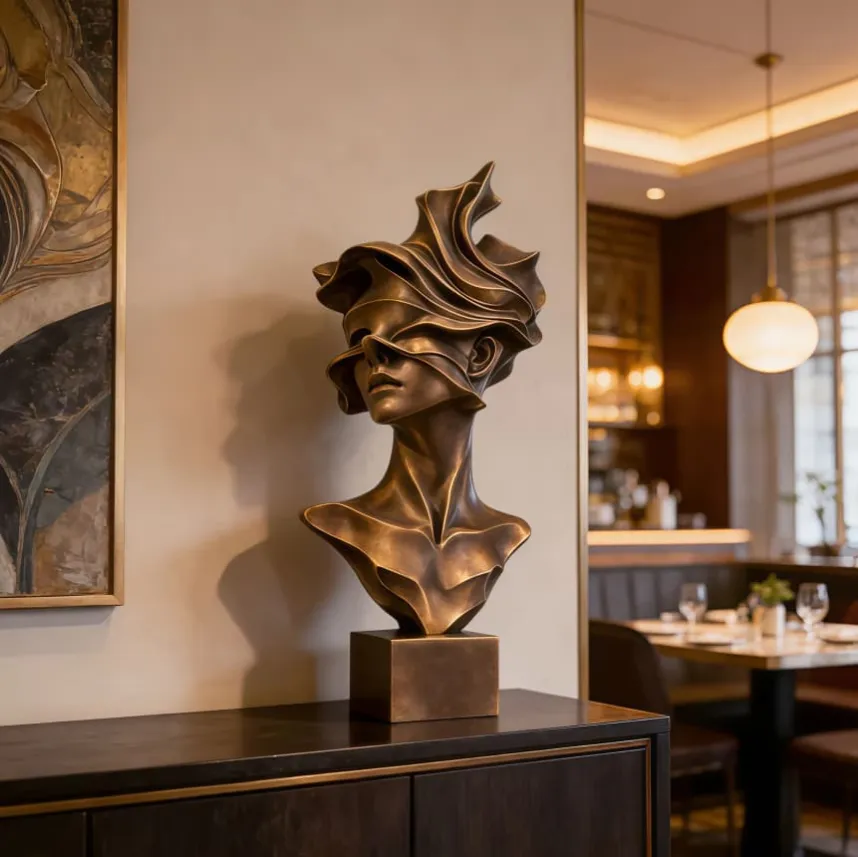
Although Michelangelo mainly worked with marble, his artistic principles strongly influence modern bronze sculpture.
Today, many bronze sculpture artists study Michelangelo's:
Human anatomy techniques
Classical proportions
Emotional storytelling
Dynamic poses
Modern bronze reproductions inspired by Michelangelo are widely used in:
Luxury hotels
Museums
Private gardens
Public spaces
Art collections
Bronze is especially suitable for Michelangelo-inspired sculptures because it provides:
Long-term durability
Outdoor resistance
Rich surface textures
Large-scale installation possibilities
Why Michelangelo Sculptures Remain Valuable Today?
Michelangelo's works remain valuable because they combine:
Historical Importance
His sculptures represent one of the highest achievements of Renaissance civilization.
Artistic Excellence
Every detail demonstrates exceptional craftsmanship.
Emotional Connection
His figures communicate universal human emotions.
Cultural Influence
His artistic language continues to inspire artists around the world.
Michelangelo-Inspired Custom Bronze Sculptures:
Today, collectors and designers often choose Michelangelo-inspired bronze sculptures for architectural and decorative projects.
Popular designs include:
David bronze statue
Pietà bronze sculpture
Renaissance human figure statues
Classical warrior sculptures
Mythological figure sculptures
Custom bronze sculpture manufacturers can recreate Renaissance-style artworks using traditional techniques combined with modern technology.
Conclusion: Michelangelo's Timeless Contribution to Sculpture
Michelangelo remains one of the greatest sculptors in history because he combined technical mastery with deep understanding of human nature.
His masterpieces such as David, Pietà, and Moses demonstrate that sculpture is not only about creating beautiful objects—it is about expressing the spirit, emotions, and potential of humanity.
For modern sculpture enthusiasts, architects, collectors, and designers, Michelangelo's artistic philosophy continues to provide endless inspiration.