Jun 26, 2026News & Insights
Non-Standardization in Bronze Sculpture: Challenges & Solutions:
Non-Standardization in Bronze Sculpture: Challenges & Solutions: Bronze sculpture is an "art of the fingertips." Its non-standard nature stems from three stages: The secondary creation of the clay mo
Non-Standardization in Bronze Sculpture: Challenges & Solutions:
Bronze sculpture is an "art of the fingertips." Its non-standard nature stems from three stages: The secondary creation of the clay mold (sculptors interpret lines differently), shrinkage variance (bronze naturally shrinks by 1.5%–2% during cooling), and the unpredictability of chemical patina (humidity and temperature cause subtle shifts in the final oxidation hue). Unlike mass-produced products, bronze sculptures are often customized, making it difficult to achieve consistency in pricing, quality, and production.
I. How to Solve Non-Standardization in Bronze Sculptures
While complete standardization is not possible due to the artistic nature of bronze sculptures, the problem can be significantly reduced with the right approach.Key Problems Caused by Non-Standardization:
- Difficulty in Price Comparison
Buyers often receive quotes from multiple suppliers, but prices can vary dramatically. Without clear standards, it becomes nearly impossible to compare offers fairly.
👉 Result: Buyers may choose lower prices without understanding quality differences.
- Quality Uncertainty
Since bronze sculptures are largely handmade, quality can vary depending on:
Artisan skill level
Production process
Internal structure (solid vs hollow)
👉 Result: Buyers face risks of receiving products that do not match expectations.
- Long Decision-Making Cycle
Due to unclear specifications, buyers need more time to:
Request revisions
Confirm details
Compare suppliers
👉 Result: Slower project timelines and delayed purchasing decisions.
- Communication Barriers
Many buyers are not familiar with technical terms such as casting methods or patina finishes.
👉 Result: Misunderstandings between buyers and manufacturers.
II. How to Solve Non-Standardization in Bronze Sculptures
While complete standardization is not possible due to the artistic nature of bronze sculptures, the problem can be significantly reduced with the right approach.
- Establish Clear Product Specifications
Suppliers should provide detailed and transparent specifications, including:
Exact dimensions (height, width, depth)
Weight and thickness
Material composition
Surface finish description
👉 This allows buyers to compare products more accurately.
- Provide Visual Production Evidence
To build trust, suppliers can share:
Production photos and videos
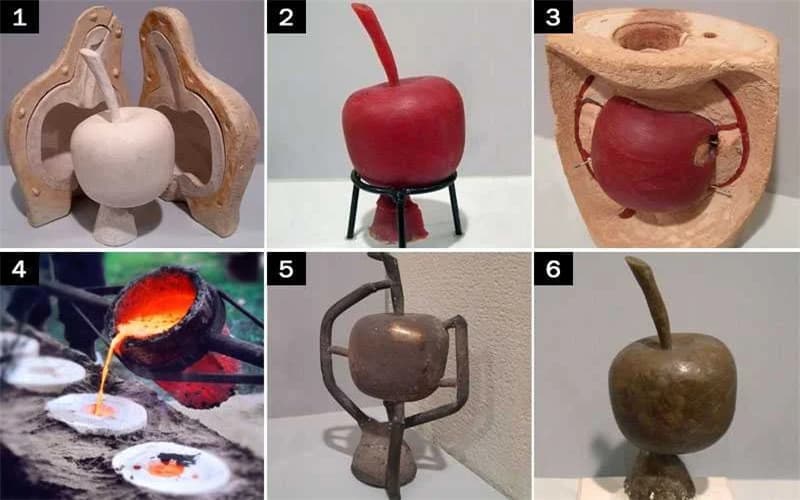
Casting and polishing process details
Before-and-after finishing images
👉 This reduces uncertainty and increases buyer confidence.
- Use Standardized Quotation Systems
A structured quotation should include:
Material cost breakdown
Labor and craftsmanship details
Packaging and shipping specifications
👉 This makes pricing more transparent and easier to evaluate.
- Offer Samples or Small-Scale Models
For large or high-value projects, providing:
Miniature models
Material samples
👉 helps buyers confirm quality before full production.
- Implement Quality Control Standards
Factories should adopt internal QC processes, such as:
Thickness inspection
Surface finishing checks
Structural stability testing
👉 Ensures consistency across production batches.
- Educate Customers
Suppliers should guide buyers by explaining:
Differences in bronze quality
Patina variations
Handmade characteristics
👉 An informed customer makes faster and better decisions.
III. Why Non-Standardization Can Be an Advantage
Interestingly, non-standardization is not entirely negative. It also means:
Each sculpture is unique
High level of customization
Greater artistic value
👉 For many buyers, this uniqueness is exactly what they are looking for.
The charm of hand-forging and casting lies in their uniqueness. Through professional process control, we minimize "non-standard risks," ensuring each piece retains its artistic soul while meeting rigorous international trade standards.